
Never forget these three hard truths about your integrity

I stood at attention as my company commander yelled. He was extolling our entire unit about the importance of physical fitness. He was emphatic. All paratroopers need to be in tip-top shape. No exceptions…no excuses. Over one hundred of us endured this speech. I was confused about why he kept going on and on. I completely agreed with him. We all concurred. Little did he know at the time that these words would come back to haunt him later. His integrity would become an issue. It was 1991. I was an Infantry Officer in the 82d Airborne Division, home of the All-American paratroopers.
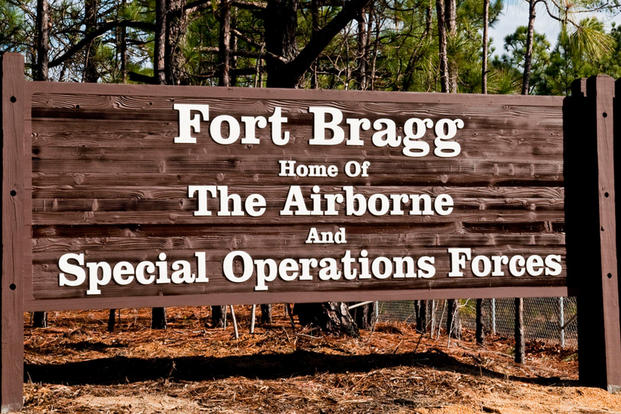
Entrance sign to Fort Bragg – Home of the Airborne.

He could not keep up with the pace

A few months later our company was participating in a battalion run. I do not recall exactly how long it was – probably four to five miles. The pace was challenging, but not severe. Our company commander was struggling to keep up. He was sweating profusely. He showed signs of complete fatigue. Several of his paratroopers yelled encouraging words. You can do it! Hang in there, sir. I was shocked by what happened next. He quit. Rangers don’t quit. He moved to the side of the formation and stopped running. One of my peers took his place at the front and we kept going.

I will never fail a fellow paratrooper. I cherish the sacred trust and the lives of men with whom I serve. Leaders have my fullest loyalty, and those who I lead will never, never find me lacking.

Airborne Creed

He embarrassed all of us

Officers do not fall out of running formations in the 82nd Airborne Division. It simply does not happen unless you become injured or physically sick. This run was the first time I saw a commanding officer not measure up. He was embarrassed, and so was his entire company. Afterward, he apologized to all of us. The harsh words from his speech a few months earlier came to mind. He was done as our leader, and he knew it. He probably did not understand it at the time, but he had violated the three hard truths about integrity.
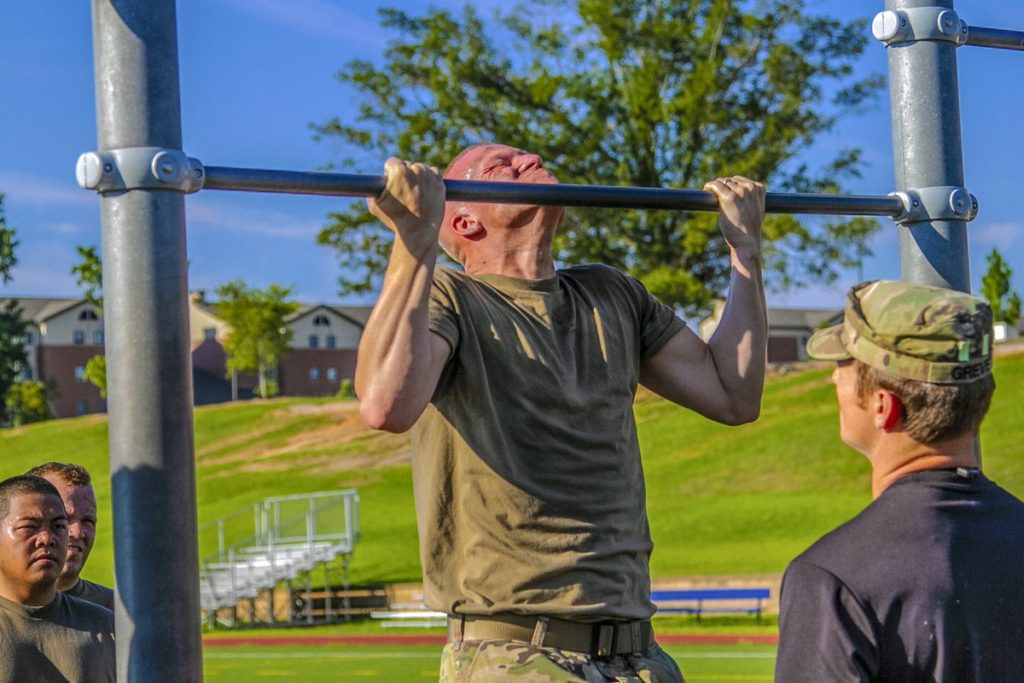
Physical standards for paratroopers are tough.

Truth #1 – Team members will pay special attention to your individual integrity as a leader

If you are a leader do not be surprised if your team members spend time and energy trying to figure you out. It is perfectly natural. As a human being, you want to know about the person in charge. Some want to know about how you lead. While others are interested in your background. What shaped you to be who you are today. A few will even wonder why you are in charge and they are not. All of them will be paying special attention to your individual integrity. Are you worth trusting, or not? I know this to be true because I faced this scenario as a new Army Officer and in every situation since then. If you ignore this truth, you will pay the price.

What training do your team members need?
Your team members will try to figure out ‘who you are’.

Truth #2 – They track three integrity attributes – ‘who you are’, ‘what you say’, and ‘what you do’

As a leader, your team members will be constantly gathering data about you. They will track ‘who you are’, ‘what you say’, and ‘what you do’. Many questions will run through the minds of your team members. A dozen examples are provided below.

  • What are you like…really?
  • What is your personality?
  • Are you a nice person?
  • What are your strengths?
  • What are your weaknesses?
  • Are you competent?
  • What do you want them to do?
  • Do you care about them?
  • What are your opinions?
  • What is the strategy?
  • Do you have a good plan?
  • How do you make a decision?

It probably does not seem fair that you face this much scrutiny as a leader. It isn’t. However, it is the reality you face. If you cannot handle it, then do not take a leadership role. Do something else. Your team deserves someone who wants the role at a minimum.

Becoming a leader is synonymous with becoming yourself. It is precisely that simple and it is also that difficult.

Warren Bennis

Truth #3 – If your three integrity attributes do not align, then the team will not trust you

As a leader, you want your integrity attributes (‘who you are’, ‘what you say’, and ‘what you do’) to align. Disconnects will lead to confusion with your team members. They may question your ability to lead because they do not trust you. Trust is crucial for a leader. In fact, it may be the most important thing you need as a leader. If your team does not trust you as a leader you will face difficult days ahead. Trust me – I have seen leaders violate this truth many times and it always comes back to bite them. Trust matters.

Simon Simek talks about leadership. Worth watching.

A simple example – ‘who you are’ does not match ‘what you say’

Let’s start with a simple example. You go to the gym and are assigned a personal trainer. He is your leader. You meet the trainer and the first thing you notice is that he is not in shape at all. He proceeds to tell you all the things you are going to do to get in top physical condition. The first thought you have is why should I listen to this trainer? If he cannot stay in shape himself, how in the world can he help me? His appearance does not match his words. Who is he? Certainly not an athlete. This disconnect bothers you. You may ask for a different trainer. I know I would.

Would you want this guy as your personal trainer?

Another easy example – ‘what you say’ does not match ‘what you do’

In this example, you work for a leader who is adamant that everyone shows up to work early. She tells your team that all of you have to be in the office no later than 8 AM every day, to include Fridays. No excuses. She punishes those who show up late. After a few weeks, you and your team members start to notice that your boss usually arrives at work around 9 AM, and even later on Fridays. You become disgruntled because there is a double standard. One that you cannot do much about until you are in charge. Make a mental note – your team will hold you to the same standard of integrity.

Some leaders obsess about showing up on time.

One final example – my poor company commander was a hot mess

Let’s finish where we started – my company commander’s speech. He was doomed to fail. He did not think about how his followers viewed him as a leader. They were constantly sizing him up and found him wanting. He underestimated how much attention they paid to ‘who he was’, ‘what he said’, and ‘what he did’. He was not an athlete. You could tell by looking at him. Imagine the response from those in the audience that day who stayed in top physical condition as he waxed poetic about working out. They probably thought he was an idiot. Eventually, my commander’s integrity flaws came to light when he quit the run. He never recovered from that fall and ended up getting fired for other integrity problems that surfaced later.

Never shall I fail my comrades. I will always keep myself mentally alert, physically strong and morally straight and I will shoulder more than my share of the task whatever it may be, one-hundred-percent and then some.

Third stanza of the US Army Ranger creed

What about you?

Are you paying attention to your personal integrity? Do your integrity attributes align? Does ‘who you are’ align with ‘what you say’ and match ‘what you do’? If so – excellent. Keep up the great work. If not – do something about it. Don’t confuse your team members and erode their trust.

ATW! is designed to make you a better leader

I hope you join me on this journey to raise up the next generation of leaders. The world is in desperate need of more great leaders. Women and men who lead with confidence, clarity, and creativity. It’s time to become the leader that your world needs. Let’s go All The Way!

All The Way Leadership!

Another trusted perspective from Dwight Eisenhower on how to define leadership

Last week I shared a trusted perspective on how to define leadership. It focused on Colin Powell. This week I will share another aspect of leadership from a well-known and trusted leader, General Dwight Eisenhower. By adding his views we start to appreciate both the complexity and components that comprise leadership.

Who was General Dwight D. Eisenhower?

General Dwight D. Eisenhower was a great US Army General. According to Wikipedia, Eisenhower was an American Army general and statesman who served as the 34th President of the United States from 1953 to 1961. During World War II, he was a five-star general in the United States Army and served as Supreme Commander of the Allied Expeditionary Forces in Europe. He was responsible for planning and supervising the invasion of North Africa in Operation Torch in 1942–43 and the successful invasion of France and Germany in 1944–45 from the Western Front.

Portrait of General Dwight D. Eisenhower from 1947.

What did Eisenhower accomplish as a leader?

If you think Colin Powell’s resume is long, then you will be even more impressed with Eisenhower’s. He was highly successful in both the military and as a civilian. Below are five major accomplishments he achieved while in leadership positions. The list goes on, but you get the picture. “Ike” was one of the best leaders the US has ever seen. Perfect – no. Effective – yes.

  1. Eisenhower led the Allied Forces to victory in World War II. His Army defeated Hitler.
  2. He was one of only a few to ever earn five stars as a General in the US military.
  3. He served as the 34th President of the United States from 1953 to 1961. Ike reached the highest political office in the US.
  4. Eisenhower ended the Korean War. He leveraged US military might to achieve peace.
  5. Eisenhower championed the formation of the Interstate Highway System. A key element to major US economic expansion.
Presidential portrait of Dwight D. Eisenhower.

How did Dwight Eisenhower view leadership?

Like Colin Powell, General Eisenhower demonstrated a pragmatic view of leadership. Eisenhower was known for his somewhat quiet and understated leadership style. According to this Forbes article, Eisenhower had a paperweight prominently displayed on his desk in the Oval Office with a Latin inscription meaning “gently in manner, strong in deed.”  Eisenhower shared many thoughts about leadership. The quote below from him is one of my favorites.

The supreme quality for leadership is unquestionably integrity. Without it, no real success is possible, no matter whether it is on a section gang, a football field, in an army, or in an office.

General Dwight D. Eisenhower

Eisenhower believed a leader’s behavior is critical

Many underestimated Eisenhower’s leadership abilities. During World War II he was surrounded by leaders who were much bolder and gregarious. Generals like Patton, MacArthur, and Montgomery seemed to seek the limelight while Eisenhower spent his time preparing for the next battle and visiting the troops. Once he commented on why he avoided the more abrasive leadership style of other Generals.

“You don’t lead by beating people over the head; that’s assault, not leadership.”

General Dwight D. Eisenhower
Famous photo of Eisenhower visiting paratroopers before D-day invasion.
A famous photo of Eisenhower visiting paratroopers before D-day invasion.

Eisenhower’s leadership view is correct

All The Way Leadership! agrees with Eisenhower. Your integrity as a leader is hugely important. If you lack integrity your team will not follow you. It is that simple. How you behave as a leader also factors into your effectiveness. It is difficult for anyone to follow a leader who behaves poorly. Don’t be that kind of leader. Instead, lead with integrity.

ATW! is designed to make you a better leader

I hope you join me on this journey to raise up the next generation of leaders. The world is in desperate need of more great leaders. Women and men who lead with confidence, clarity, and creativity. It’s time to become the leader that your world needs. Let’s go All The Way!

All The Way Leadership!

A trusted perspective from Colin Powell on how to define leadership

Earlier this year I wrote about the best definitions of leadership. It focused on John Maxwell and Peter Drucker’s definitions. This week I will share an insightful idea from a well-known and trusted leader, General Colin Powell. By adding his perspective I continue to identify the components that comprise leadership.

Who is General Colin Powell?

General Colin Powell was one of the greatest US Army Generals in the last century. According to Wikipedia Powell was a professional soldier for 35 years. He held a myriad of command and staff positions and rose to the rank of 4-star General. Powell completed multiple combat tours in the Vietnam War. General Powell served as National Security Advisor (1987–1989), as Commander of the U.S. Army Forces Command (1989) and as Chairman of the Joint Chiefs of Staff (1989–1993), holding the latter position during the Persian Gulf War.

Army Gen. Norman H. Schwarzkopf consults with then-Chairman of the Joint Chiefs of Staff Gen. Colin Powell during Desert Shield and Operation Desert Storm. Two great modern American Generals. (U.S. Air Force photo/Tech. Sgt. H. H. Deffner)

General Powell is a pioneer

Powell was the first, and so far the only, African American to serve on the Joint Chiefs of Staff. He was the 65th United States Secretary of State, serving under U.S. President George W. Bush from 2001 to 2005, the first African American to serve in that position. His resume as a leader is impressive. I trust his leadership perspective.

Colin Powell was the first African-American Secretary of State. (AP Photo)

What did General Powell accomplish as a leader?

The list of General Powell’s accomplishments as a leader is too long for this blog. For his service, General Powell received numerous U.S. and foreign military awards and decorations. Powell’s civilian awards include two Presidential Medal of Freedom, the President’s Citizens Medal, the Congressional Gold Medal, and the Secretary of State Distinguished Service Medal. General Powell also wrote multiple books. I read two of them (My American Journey, It Worked for Me: Lessons in Leadership and Life). I highly recommend both.

My copy of Colin Powell’s autobiography.

How does Colin Powell view leadership?

In his books, Colin Powell describes a practical view of leadership. I trust his judgment. He has more experience than most leaders. His track record speaks for itself. General Powell was highly successful in numerous leadership roles. My favorite leadership quote by Colin Powell is below. It describes the specific actions that leaders should focus on to be successful.

Leadership is solving problems. The day soldiers stop bringing you their problems is the day you have stopped leading them. They have either lost confidence that you can help or concluded you do not care. Either case is a failure of leadership.

General Colin Powell

Powell and Drucker both believe what you do matters

General Powell’s leadership perspective is similar to Peter Drucker’s. According to both of them what you do as a leader is important. Powell points out that you must be able to take care of your people and solve their problems. Otherwise, they will stop following you. In other words, competency counts and actions speak louder than words.

Solving problems is a leaders job.
Solving problems is a leader’s job.

Powell’s leadership view is accurate

You demonstrate leadership skills by solving problems. If you cannot, then why are you in charge. Also, it is one thing to tell your team members you care about them. It is another thing to actually solve their problems. If you do one without the other you are failing as a leader. We all probably know at least one leader who talked a big game, but never followed it up with actions. Don’t be that kind of leader.

General Colin Powell in uniform.

ATW! is designed to make you a better leader

I hope you join me on this journey to raise up the next generation of leaders. The world is in desperate need of more great leaders. Women and men who lead with confidence, clarity, and creativity. It’s time to become the leader that your world needs. Let’s go All The Way!

All The Way Leadership!