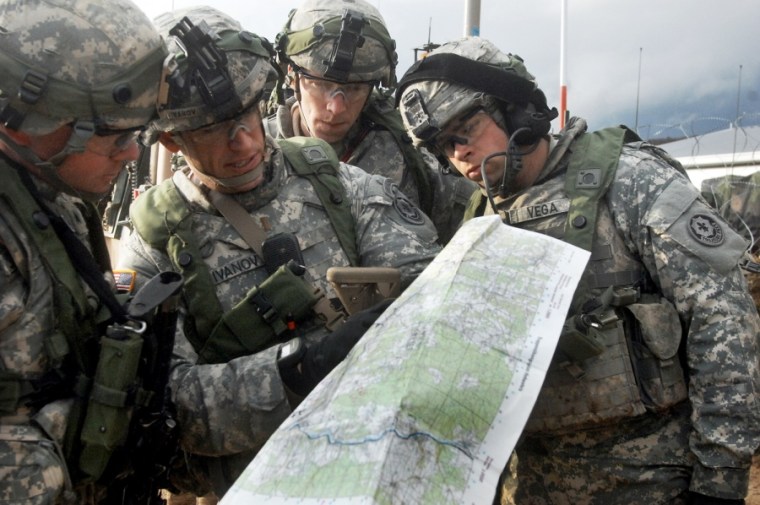
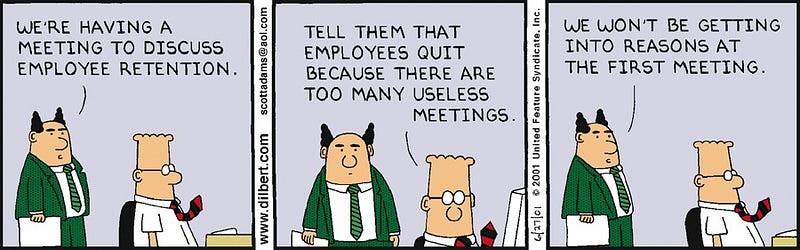
Our Battalion Commander pointed at the map and explained his strategy. Everything was dependent on the element of surprise. We must attack before being detected. Otherwise, the battle would be lost. Guess what happened when we executed the strategy. The enemy detected our battalion before anyone was in position. Chaos ensued, and we were wiped out. Luckily for us, it was a training exercise, not a real-world operation. Nonetheless, our commander was embarrassed and chastised by his senior leaders for creating a bad strategy. Our commander made a classic leadership mistake. He discounted the risk and assumed that everything would go according to plan. It didn’t, and we failed.
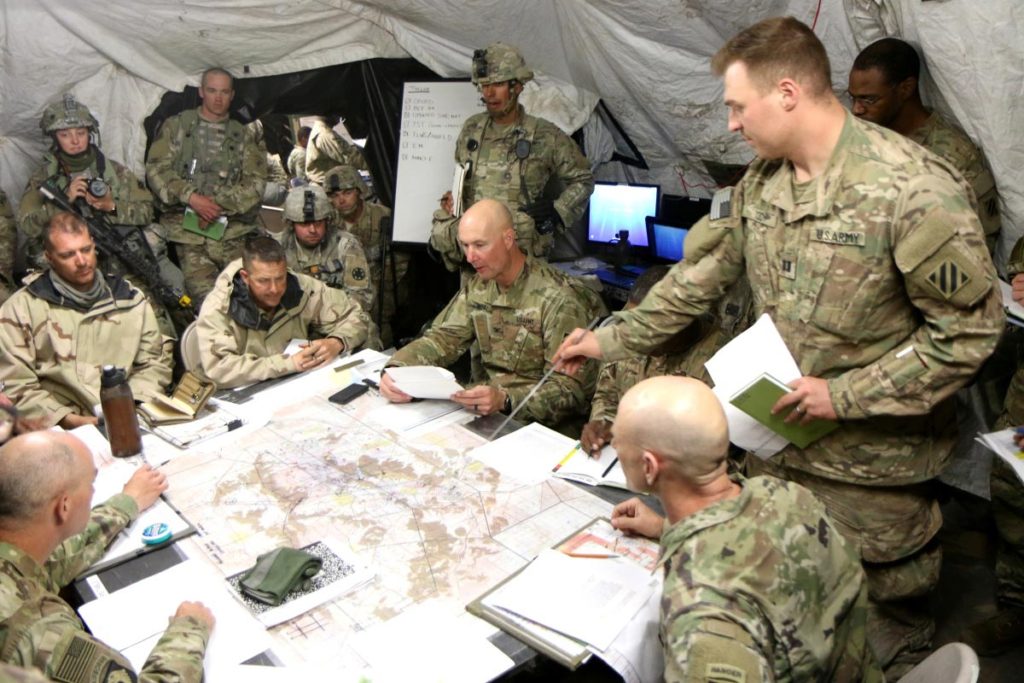
An Army leader is briefing his team members.
The biggest mistake you can make is ignoring the risks
Every strategy you create as a leader will come with risks. I am amazed at how many leaders choose to dismiss, ignore, or discount the risks rather than deal with them. There simply is no such thing as a risk-free strategy. The best approach that a leader can take when crafting a strategy is to identify the risks and determine ways to manage or mitigate them. The biggest mistake you can make is ignoring the risks and hoping for the best. The best-case scenario rarely happens, and certainly does not happen over and over again. Prepare for the worst-case scenario so that your strategy does not fall apart because your team does not know what to do.
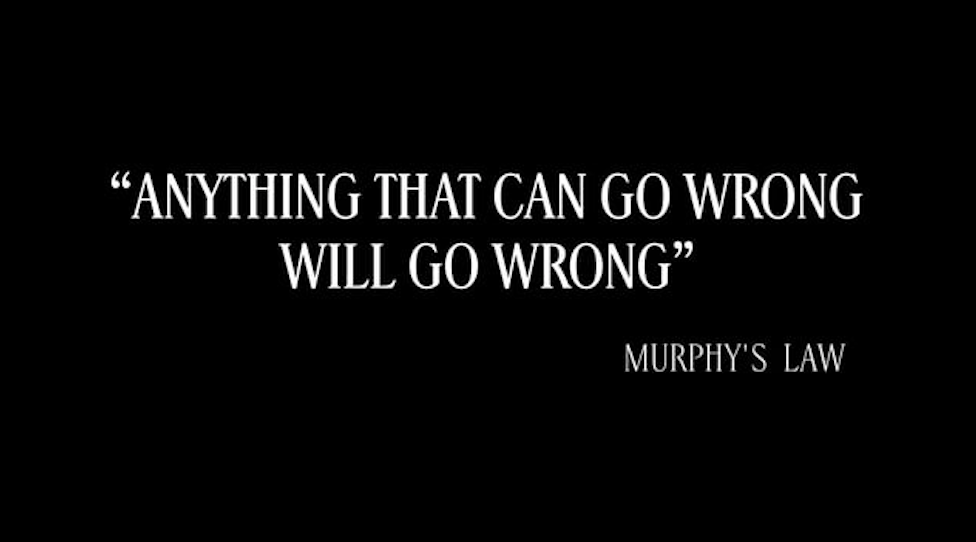
There are many versions of Murphy’s law – this is the easiest to remember.
Making bold moves creates the biggest impacts
As a leader, you drive results. In many cases, that means your strategy will need to include bold moves. Never forget that risks and rewards correlate. If you want a large reward as the outcome of your strategy, you will likely need to include some bold means that will come with risks. Bold strategy = higher risk. Recognize this truth and factor it into your plans. If you are expecting huge results from your strategy and do not contemplate the associated risks, then you are setting up your team for struggles. Don’t be that kind of leader. Plan for the risks and deal with them when they arise.
The D-Day invasion was a high-risk strategy that paid off.
Another mistake – don’t be afraid to take risks
It is also important to point out that you need to take risks as a leader to get great results. If you refuse to ever take big risks, don’t be surprised if your team gets stuck in neutral. Now, I am not saying take big risks all the time, or stupid risks. Rather, I am suggesting that smart, calculated risks are the way to go. I like the way Mark Zuckerberg says it below. You will likely fail if you avoid all risks. Be brave.
The biggest risk is not taking any risk… In a world that changing really quickly, the only strategy that is guaranteed to fail is not taking risks.
Mark Zuckerberg
One caveat – not all strategies require boldness
Not all situations require a bold strategy. If the team you are leading is performing well and delivering high-impact results, don’t feel the need to put a bold strategy in place. In this case, craft a strategy that keeps your team moving forward. Manage the risks as needed and monitor the situation in case changes are needed down the road. You will exhaust your team if every day is high-risk execution.
Excellent performance means your strategy is working.
ATW! will make you a better leader
I hope you join me on this journey to raise the next generation of leaders. The world is in desperate need of more great leaders. Women and men who lead with confidence, clarity, and creativity. It’s time to become the leader that your world needs. Let’s go All The Way!
Captain Slacker stood up to deliver his operations order. He described the mission with enthusiasm. We would all board helicopters, fly to the landing zone, disembark, and seize the objective by force. A classic raid operation. The rest of the battalion would arrive by truck. Captain Slacker ended the briefing with a loud hooah, fully confident. Our Battalion Commander was in the room listening intently. He seemed unsettled. I was a platoon leader in the Army, wondering whether I was having a lessons-learned moment. My hunch was accurate.
Operations orders describe the plan in detail.
Things went from good to bad
The Battalion Commander asked one question. “Captain, who told you that your company would be conducting the raid via helicopters?” Silence. “Your company is arriving in the trucks. Your plan is crap! Fix it!! I will return in an hour to hear your new plan. Hooah, indeed.” You could hear a pin drop in the room as the Battalion Commander left the room while we all stood at attention.
Blowing it in front of a senior leader is always painful.
Learn from others’ mistakes to avoid repeating them – make sure everyone knows the strategy
We all helped Captain Slacker revamp the plan so that he was prepared for the battalion commander’s return. The second briefing went fine, but we could all tell that the colonel was still pissed. I later learned that Captain Slacker missed the meeting where the battalion’s strategy was shared. I made a mental note. Make sure I know the strategy before writing my own plan. It is a mistake I have seen many times in my career. Lesson learned #1 – make sure everyone knows the strategy, or else you will see plans that make zero sense.
Not knowing the strategy leads to misaligned plans.
Lessons Learned #2 – Communicate it often
As a leader, you remember the strategy. The question is whether or not your stakeholders remember it. Don’t be surprised if they don’t. You need to communicate the strategy often, especially for bold ones that will be challenging to implement. When obstacles arise, your team members will ask, ” Why are we doing this. Reiterate the strategy to them – it will help you get everyone to the finish line, especially when things get hard.
All-hands meetings are excellent opportunities to communicate the strategy.
Lessons Learned #3- Create a clever way to capture the central idea
It is difficult for me to remember stuff. We all face this challenge. You do, and so do your team members. Help them remember the strategy by creating a clever way to capture the central idea. A few methods that seem to work well include using an acronym, slogan, or graphic depiction of the strategy. Some of you are probably shaking your head, thinking this lesson learned is unnecessary. Trust me, it is a worthwhile investment of your time to come up with a clever way to communicate it to your stakeholders. Otherwise, they will forget it quickly.
An excellent example of an easy-to-remember acronym.
Lessons Learned #4 – Market it
Yes – you read that correctly. You need to market your strategy. Use a memorable slogan or compelling graphic to get the word out. I am a big fan of having a one-page summary of the strategy that you can use post and easily reuse. Another technique that seems to work well is to brand your communications with a slogan or graphic. Your stakeholders will see it consistently and be reminded regularly where the organization is going.
Apple uses clever marketing for its talent strategy.
Bottom line – leverage these four lessons learned for crafting your winning strategy
Make sure everyone knows the strategy.
Communicate it often.
Create a clever way to capture the central idea.
Market it.
Manage the top line: your strategy, your people, and your products, and the bottom line will follow.
Steve Jobs
ATW! is designed to make you a better leader
I hope you join me on this journey to raise the next generation of leaders. The world is in desperate need of more great leaders. Women and men who lead with confidence, clarity, and creativity. It’s time to become the leader that your world needs. Let’s go All The Way!
I listened intently as the senior leader spoke. He was sharing the “new” strategy with the leadership team. It was the same old, same old. He claimed that we were in normal market conditions, and if we worked hard, everything would be fine. In fact, the market had shifted. Conditions were much more challenging than in the past few years, and we needed a new strategy. Our leader did not deliver one. Fast forward a year, and things were not good. We missed our targets. A new leader was brought in. Our previous leader made a classic mistake and paid the price. He did not know the practical tactical tips leaders leverage to craft a winning strategy.
Practical tactical tips to craft a winning strategy
In this post, I am going to share some practical tactical tips (PTTs) for how to craft a winning strategy based on experience. Simple advice for new leaders to follow.
Practical tactical tips are worth jotting down for future use.
Practical Tactical Tip (PTT) #1 – Don’t take too long to craft the strategy
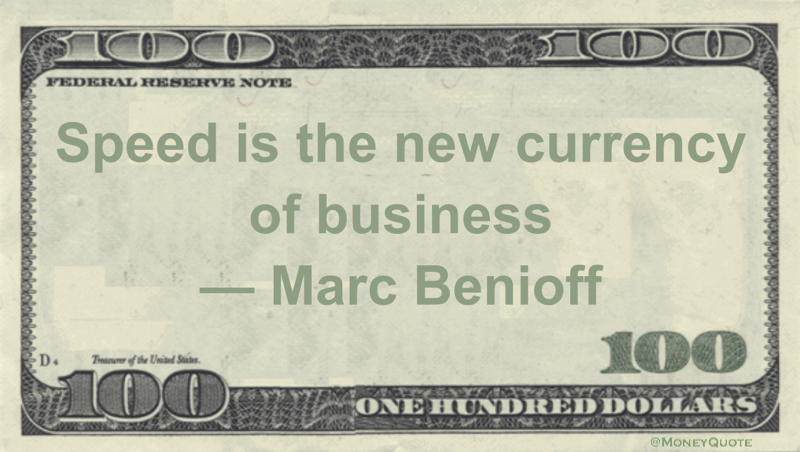
Speed matters a lot these days. If you are going to implement a winning strategy, it needs to be timely. One vitally important lesson that the pandemic taught all organizations is that change may come much faster than you anticipate. With that thought in mind, don’t take too long to craft the strategy. If you do, you risk missing the opportunity window that will determine if the strategy is successful or not. In general, I recommend taking no longer than 90 days to craft your strategy. That may seem fast to some. I was in an organization that took many months to craft our strategy. While we wasted time pondering, our competitor moved out with a new strategy and crushed us. It took years to recover from our protracted approach.
PTT#2 – Don’t look too far out for the future state
Any strategy should focus on getting an organization to a desired future state. Clearly identifying the destination you are trying to reach provides clarity to all stakeholders. One thing that has changed over the past few decades is the time horizon used for effective strategies. Five and ten-year strategies used to be all the rage. Nowadays, it is difficult to project what things will be like that far forward. Instead, I recommend framing any strategy for the next few years. No more than 1-3 years out. Five years is far-fetched. Ten years is pure fiction. Any strategy with a time horizon longer than that is a complete fantasy.
Make sure to include a future state in your strategy.
PTT#3 – Avoid calling everything a strategy
In the office, you hear the word strategy thrown around a lot. It is a buzzword. In fact, some people say that you need many strategies to accomplish an outcome. When I hear most people say strategy, they are actually talking tactics, techniques, goals, or objectives. Watch the video below if you want a quick primer on what a strategy is and is not. I recommend avoiding calling everything a strategy – it will confuse your stakeholders and make you look uninformed as a leader.
Remember – Collaboration creates buy-in
One final reminder. Remember that collaboration creates buy-in. If you include stakeholders in crafting the strategy, they will be more open to it than if you leave them out until it is time to implement. Sure – collaboration requires more time and energy than crafting the strategy yourself, but it is well worth the investment.
Collaboration creates better ideas and strategies.
ATW! is designed to make you a better leader
I hope you join me on this journey to raise the next generation of leaders. The world is in desperate need of more great leaders. Women and men who lead with confidence, clarity, and creativity. It’s time to become the leader that your world needs. Let’s go All The Way!
She took a big swig of Diet Coke. The first slide was displayed on the screen. It described the current state. Next slide. It was a vision for where she wanted the organization to go. The room was packed with her team members. She was rolling out a bold new strategy. This was the meeting to share the strategy and build consensus. If she did not get them on board, the strategy would stall. Next slide. She talked through the details they had crafted as a team. The energy in the room went up dramatically. It was time to execute. Exciting days were ahead. She had prepared well for this moment by asking herself several insightful questions beforehand.
Getting buy-in from your team is key to success
I am not a strategy expert
All The Way Leadership! believes that crafting a winning strategy is what strong leaders do. I am not a strategy expert. If you want to go deep into that topic, find someone who is. Instead, I simply advise that all leaders ponder a few key questions when it comes to strategy. These insightful questions (IQs) are found below.
A good strategy does not need to be complicated.
IQ#1- Should I create the strategy myself?
The short answer is no. Don’t go it alone. Be sure to include members of your team and other stakeholders when creating the strategy. It is rare that you will have enough insights and ideas to craft a winning strategy all by yourself. I call this the Moses coming down from the mountain approach. Don’t do it. There is one exception – when you are on a short deadline. Sometimes the situation is dire, the building is on fire, and you need to put it out. In this case, you need to crank out the strategy all by yourself. Otherwise, include others.
Avoid being Moses when crafting your strategy. Include others.
Strong leaders collaborate with stakeholders when crafting the strategy
Strong leaders ask insightful questions of others when crafting their strategy. Get the big brains in the room, and ask for their input. In my career, some of the best strategic ideas have come from junior members of the team. Don’t exclude them. They tend to bring a fresh perspective to the table. The higher up in the organization that you sit, the more stakeholders you will need to include. Plan accordingly.
Brainstorm with others when crafting your strategy.
IQ#2 – How do I know if I have a bad strategy?
One way to confirm if your strategy is good or not is to select metrics you will track when you implement. This approach enables you to tell if it is working or not. For example, if you craft a discounted pricing strategy to increase your overall sales, you will be able to tell shortly after implementation if it is working. If it doesn’t work, consider it the wrong strategy and move on to something else. Results count more than opinions, but it is important that you seek input before you implement.
Metrics help you track if the strategy is a good one.
Strong leaders get feedback about the strategy from their stakeholders
Leaders need to get feedback from their stakeholders. Just because you codified it doesn’t mean it is good. Ask insightful questions, like Do they understand your vision? Does the strategy make sense? What are their thoughts about implementing it? It is critical that you get input from others in order to build consensus and move your team forward. Getting buy-in from others is critical for success before you start executing.
Don’t expect all the feedback to be positive.
IQ#3 – What are the best ways to communicate my strategy to the team?
The third point to ponder is how you communicate your strategy to your team. My recommendation is that you walk them through it and answer any questions they have. Don’t be surprised if you get several questions, even if you included many of them in the formulation phase. It will get real for your team the closer you get to execution. PowerPoint is the best tool I know to capture a strategy. Keep the slides to 10 or fewer. Anything longer is probably overly complicated and still needs work.
Make sure your team is bought into the strategy.
Strong leaders communicate their strategy consistently and creatively
It is the leader’s job to communicate consistently and creatively. Your team and other stakeholders will need to be reminded at times what the strategy is during execution, especially when they run into obstacles. Provide something creative to help stakeholders easily recall the main points. A slogan, acronym, or summary slick sheet is a way to communicate your strategy. I am a big fan of having a one-page summary that your team can carry around with them in case questions arise during implementation. If it feels a little like internal marketing. It is. The bolder the strategy, the more important it is to leverage clever ways to consistently communicate it.
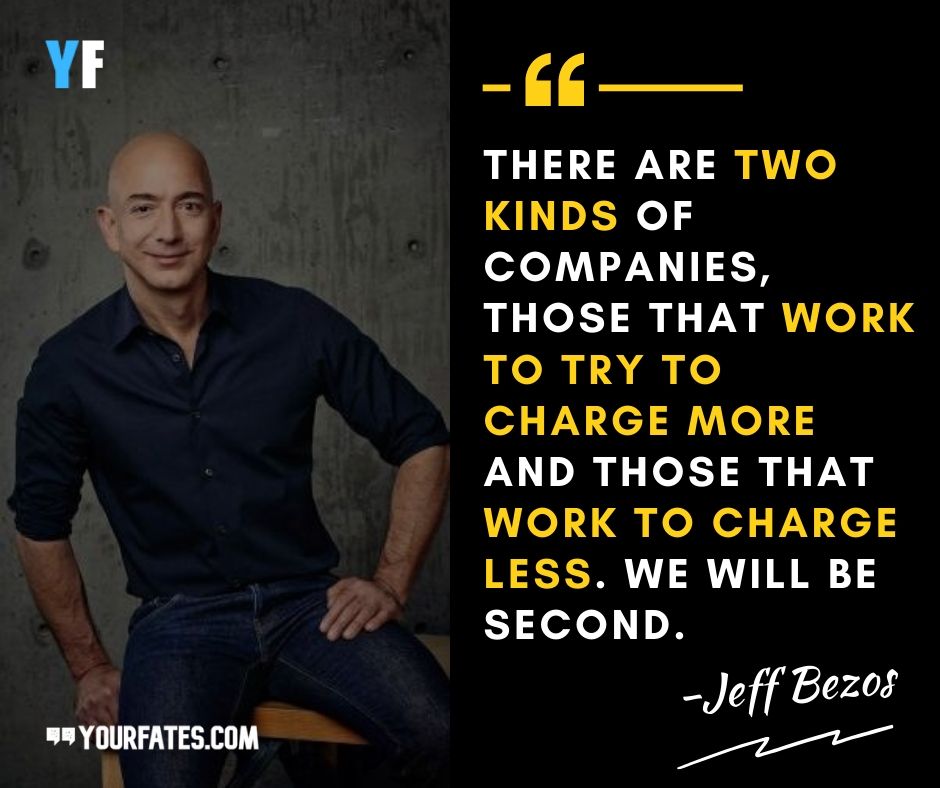
Amazon’s former CEO is known for insightful strategic sayings and slogans.
IQ#4 – Is it important to communicate the strategy to my boss? Why or why not?
The right answer is hell yes. This question seems like a no-brainer, yet I have seen this misstep made by leaders more times than I can count. It is vital that your boss understands and endorses your strategy. Otherwise, you risk huge missteps during execution. Case in point, the pricing strategy is an important component of any federal contracting proposal. If your team is taking an aggressive approach and the boss does not know, you will discover the disconnect when it comes time to get the approval for the bid. Hello, rework. Make sure you inform your boss and get her input. Don’t make the mistake of waiting until it is too late to find out that your boss does not concur with your strategy.
Keeping your boss informed is vital to success.
Take the time to ponder insightful questions
Strong leaders understand the importance of crafting a winning strategy. They ask insightful questions and collaborate with their stakeholders. They gather feedback and adjust accordingly. Strong leaders communicate the strategy consistently and make sure it is approved by their boss. Be that kind of leader.
However beautiful the strategy, you should occasionally look at the results.
Winston Churchill
ATW! is designed to make you a better leader
I hope you join me on this journey to raise the next generation of leaders. The world is in desperate need of more great leaders. Women and men who lead with confidence, clarity, and creativity. It’s time to become the leader that your world needs. Let’s go All The Way!
A plan of action designed to achieve a major or overall aim.
Basic definition of strategy
Some leaders are clueless
Have you ever worked for a leader who does not know what a strategy is…really? No one trained him, and it showed. For example, I worked for one leader who had no clue. He knew it, I knew it, everyone knew it. The organization put this leader in charge of crafting the strategy we would use moving forward. He floundered, and we all watched while this leader struggled. He did not know what he was doing and never delivered. All his stakeholders were left in the dark, wondering what was happening. Where were we going? As you might imagine, it was a painful experience for all of us, and it did not end well for this leader.
The leader who replaced him understood strategy
Eventually, a new leader was put in place. This leader went to work right away, crafting a strategy for the organization. She gathered a team to help define the strategy. She socialized it with her leadership team, received feedback, and made adjustments. A final product was delivered that was well-received by practically everyone. Trust was restored, a clear path forward was identified, and performance improved rapidly as we began executing the new strategy. I watched in wonder as she turned around a bad situation in about 90 days. It was a pleasure working for a leader who knew what she was doing and inspired her followers.
In reality, strategy is actually very straightforward. You pick a general direction and implement it like hell.
Jack Welsh
A tool to help craft your strategy
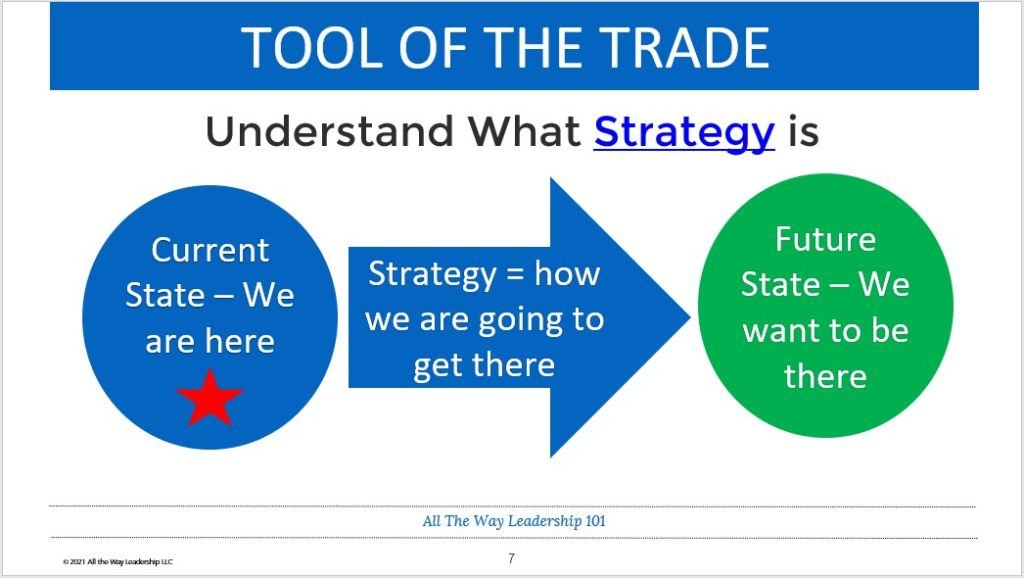
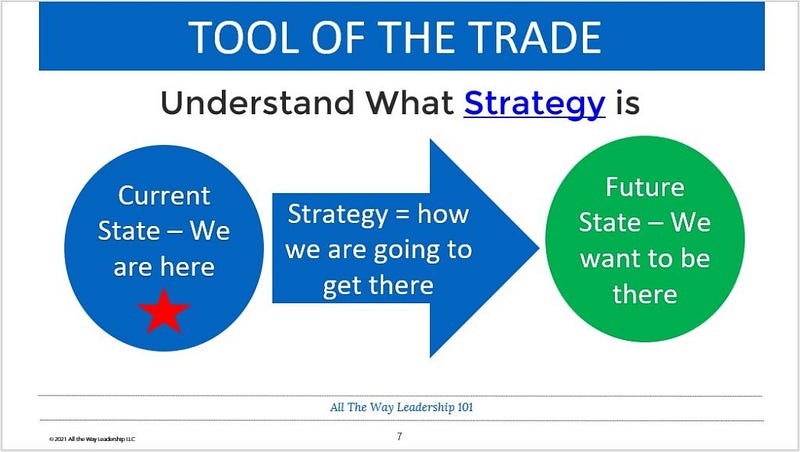
As a leader, it is important that you understand what a strategy actually is. Some leaders struggle with thinking strategically because they do not really know what it means. You probably hear the word strategy a lot. I would offer that what many people are talking about when they say the word strategy is actually tactics, processes, and procedures. The diagram below is the best way I know to think about what a strategy is. It is simple to understand.
Use this simple diagram to formulate your strategy
When in doubt, draw it out using this simple diagram. Starting on the left — we, that is, you and your team, are here. It is important to define the current state — the blue circle with the red star. Describe what is going well with your team and what needs to change. On the right is the future state. You want to be there — the green circle. The strategy articulates how you are going to go from here to there — the arrow. Any strategy that does not include a how is not an actual strategy. I am going to say that again because I cannot count how many strategic briefings were all fluff and no substance. In other words, there was no way to actually implement the strategy. Any strategy that does not include the how is not an actual strategy.
An example of a strategy with no how in it
Years ago, I worked for an organization that did not understand this topic. The business unit I worked in did not know how to articulate real strategic thinking. For one year, all we received from senior leadership was “grow the business”. The current state of the business was only the revenue number we generated last year, $100 million. The future state was another number — our target for the next year, $120 million. The strategy was to grow by $20 million, or 20%. No mention of how we would reach that number. Go and grow. Wow — talk about a strategy with no how in it. What happened next was predictable.
The leadership team struggled to get everyone motivated
The go and grow strategy was not well-received by the leadership team. Market conditions were changing — the next year would be much harder than the last year. The growth target was much larger than the previous one — twice as large. Leaders in the business unit wondered how in the world we were going to grow twice as fast in a tough market. The senior leaders provided no clear answers. The reality is that they did not know how we would do it. They were hoping for the best. The leadership team struggled to get everyone bought into the strategy and motivated to make it happen. As a result, we did not have a good year; we missed the target, and new leaders were brought in to fix the problem.
What about you?
Do you know how to craft a winning strategy? Have you taken the time to formulate, codify, and communicate it to your stakeholders? If not, make the investment now. If so, you will enjoy the next few blogs. We are going to explore this topic in detail to include points to ponder, practical tactical tips, and lessons learned based on decades of experience.
ATW! is designed to make you a better leader
I hope you join me on this journey to raise up the next generation of leaders. The world is in desperate need of more great leaders. Women and men who lead with confidence, clarity, and creativity. It’s time to become the leader that your world needs. Let’s go All The Way!
Take a moment right now and think about a strong leader you know. Someone you truly enjoyed working for. Ask yourself a basic question about this leader. Does she know how to craft a winning strategy in challenging conditions? I bet the answer is yes. Strong leaders win, even in trying times. Now think about a weak leader you know well. Someone you did not enjoy following. Ask yourself the same question. Did he select a winning strategy? Your answer probably changed to no. It is difficult to follow someone who does not know how to win, especially when things get tough. Losing sucks. It always has and always will.
Winning is a great feeling that your team wants to experience.
Strategy is a constant leadership challenge
Strong leaders think strategically on a regular basis. How will my team win today, tomorrow, and the next days after that? Having a winning strategy is a constant challenge that every leader faces. Trust me – your competition is thinking about ways to beat you and your team. You better do the same thing. It is easy to rest on your laurels and fall into the trap of focusing your time and energy as a leader on tactical execution. I call it the “keeping the trains running” mentality. Weak leaders keep their heads down, failing to look at the big picture and over the horizon. Don’t be that kind of leader. Being a strong leader is more important than ever these days.
Sometimes a leader needs to step back and look at the big picture.
It is a highly competitive marketplace, so strategy is important for success
The business world is a competitive place. I cannot think of many industries that are not highly competitive. If you want to win, you better have a good strategy before your competition eats your lunch. If some days it feels like you are in a brawl at work – it probably is because you are. Let’s face it – the current environment makes it important to have a good strategy. A lot has changed the past year. Strong leaders recognized the need for new strategies to be successful in the modern world and are adjusting accordingly. While others are hoping that things will return to normal (whatever that means), and may not make it much longer.
Everybody has a plan until they get punched in the mouth.
Mike Tyson
Leaders are expected to provide the winning strategy for the team
Let’s pose a simple question – who is responsible for the strategy? Answer – the leader. Sure you are going to get help from others when crafting the strategy. But, if you are the leader, you need to own the strategy for your team. They will expect it, and you need to deliver. Think about it. Who will the team turn to when execution gets tough? The leader – of course. That is why you are there. Strong leaders understand that they are expected to provide the winning strategy for their team. Weak leaders delegate it to others, or simply hope for the best. And we all know by now that hope is not an effective strategy, especially in a competitive market.
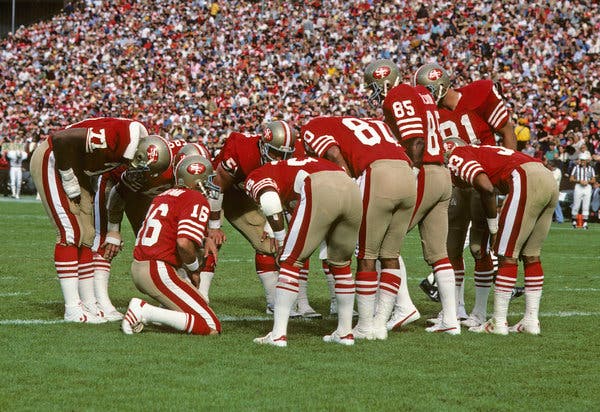
You are the quarterback – call the play!
Picking a winning strategy may be challenging if you have many possible paths in front of you
My last point is somewhat counter-intuitive. I believe picking the best strategy is most difficult when you have many possible options. It is usually pretty easy to pick between two or three options. More than that then you should spend some time analyzing each option before selecting, but don’t take too long. The reason I mention this topic is that I have worked for leaders who were bad at strategy simply because they wasted precious time trying to pick the best path forward. We would spend days, weeks, and months thinking through the options and never commit fully to one. Meanwhile, our competitors selected their strategy and were busy executing it.
Don’t spend too much time selecting the strategy.
What about you? Do you have a winning strategy?
Are you crafting a winning strategy for your team? Do you spend time thinking strategically with your team on a regular basis? If not, then you have work to do. Don’t worry – All The Way Leadership! is here. The next series of blog posts will focus on strategy formulation.
ATW! is designed to make you a better leader
I hope you join me on this journey to raise the next generation of leaders. The world is in desperate need of more great leaders. Women and men who lead with confidence, clarity, and creativity. It’s time to become the leader that your world needs. Let’s go All The Way!
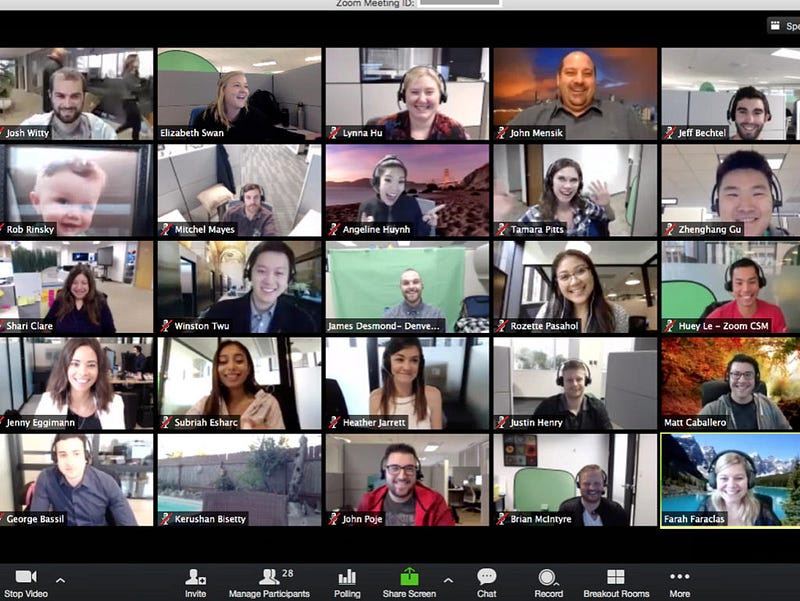
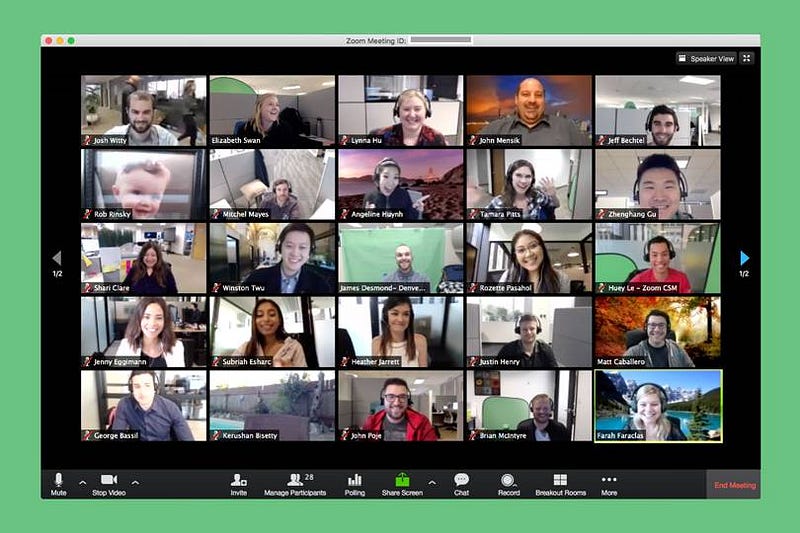
This blog is all about the worst mistake that a leader can make on a video call. No, it is not the mute button. Some of you think I am going to say that misusing the mute button is the worst mistake you can make as a leader during a video call. Talking while on mute is a mistake, but it is really not a big deal. All you have to do is come off mute and repeat what you said while muted. Saying something stupid without the mute button on can be bad, really bad. But I believe most leaders are smarter than that and will not fall into that trap.
The most common major mistake leaders make on video calls
Looking bad on camera is the worst mistake you can make as a leader during a video call. Like many of you, I have participated in hundreds of video calls over the past several years. I am amazed at how many leaders show up on the call looking bad, really bad in some cases. It makes me wonder if they thought at all about what others would see when they turned on their camera. I believe it is better to keep your camera off than to show up looking like you just rolled out of bed. Your team deserves better than that. There are several problems that cause a leader to look bad on camera.
Problem #1 — Awkward camera angles
Let’s start with your camera. Have you positioned it well? Or does your team get to experience seeing you at awkward angles? Below is a short list of the most common camera angles mistakes:
Too far away — you look tiny in the frame.
Way too close — everyone gets to see all the wrinkles on your face.
Too low — your team gets to see if you groomed your nostrils.
Not centered — you are in the frame, but nowhere near the center.
Side angle — people prefer to see your face, not the side of your head.
Problem #2 — Distracting background
Besides your smiling face, what else does your team get to see during your video calls? What kind of background is behind you that will show up on camera? I highly recommend you use a custom background if you can. Both Zoom and Microsoft Teams allow you to do this. This functionality not only looks better, but it also hides what is going on behind you. Trust me — this cloaking can prevent gaffes if someone shows up unexpectedly behind you. If you cannot use a custom background, spend a little time making sure that your home office is not distracting to others. I am not an interior decorator, so I don’t have an expert opinion. In general, less seems better to me. Yes — it is okay to select a custom background that matches who you are.
Problem #3 — Improper lighting
Lighting can be tricky. Too much light and you look like a ghost. Not enough light, and no one can see you. I recommend investing some time and money into configuring your office so that the lighting works well for you. I actually invested in a ring light kit. It costs less than $100. I felt a little silly when I bought it, but I thought it was worth trying out. It makes a big difference. I use the light for all my video calls that I take from home nowadays. It works really well and is both portable and adjustable.
Problem #4 — Poor audio quality
It is completely annoying when you cannot hear clearly what someone is saying during a video call. Poor audio quality is usually due to a bad connection or lackluster equipment. Once again, I recommend spending a little money to make sure your audio quality is good. I am a big fan of using headphones for video calls. I bought a Bose pair of noise-canceling headphones that I wear for all my calls. They were expensive but well worth the investment. A good microphone will also do the trick.
Problem #5 — Improper choice of attire
I am not here to be your fashion advisor. Rather, I recommend that you show up on your video calls dressed appropriately for the setting and in line with your organization’s culture. Of course, what is appropriate will vary greatly. When in doubt, be conservative. If you want to be taken seriously, dress the part — don’t show up in a hoodie and baseball cap. For heaven’s sake, don’t show up in a robe or your pajamas for a business call. Remember — your customers will get a visual impression based on how you dress. I have been surprised by how informal some people are on camera. Lastly, I recommend you dress your age. No one wants to see someone like me trying to act like I am back in my 20s.
Fix this mistake before worrying about others
Sure — there are many other problems a leader may experience on a video call. Those don’t matter much until after you tackle this one. Trust me — no one will remember if you accidentally talked while on mute. But they will remember if you showed up looking bad, wondering what in the world happened to you that day. Avoid making this easily fixed mistake.
First impressions matter. Experts say we size up new people in somewhere between 30 seconds and two minutes.
Elliott Abrams
What about you?
How are you showing up on camera these days? If you are looking good, keep it up. If not, do the work required. I know it sounds trivial. However, it is worth investing a little time to show up strong. Remember the camera captures everything, and so will your team members.
ATW! is designed to make you a better leader
I hope you join me on this journey to raise the next generation of leaders. The world is in desperate need of more great leaders. Women and men who lead with confidence, clarity, and creativity. It’s time to become the leader that your world needs. Let’s go All The Way!
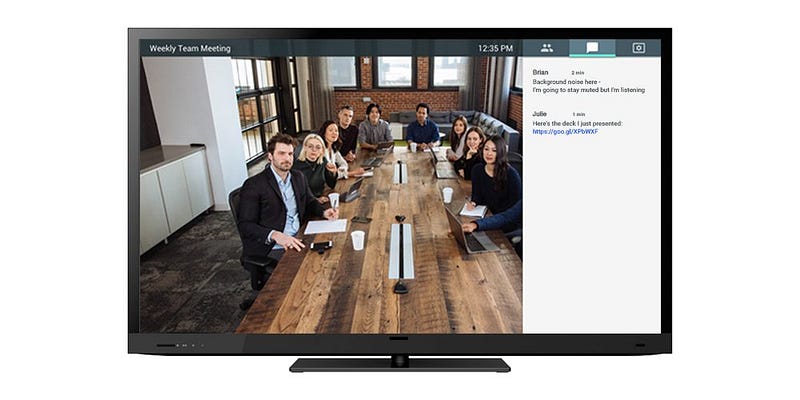
Here is another practical tip to avoid on-camera confusion during your next video call. If it is your meeting, actively facilitate the call. Don’t expect the participants to know what to do during your calls.
Communicating effectively on-camera is challenging for groups
In case you did not read the last two blogs, let’s start with the hard truth first — it is challenging to communicate effectively on-camera, especially in group settings. Three common scenarios happen during many video meetings that can create communication challenges.
Awkward: someone said something completely inappropriate (e.g., yelled at their kids) that everyone heard. What do you do next?
Boredom: No one is talking because they are distracted and not paying attention. Hard to get stuff done if everyone is zoned out.
Confusion: multiple people talking at the same time. Hard to hear, let alone understand, what is being said when this happens.
What can you do to improve your performance during video calls?
I already shared the most practical tip I can give you to be better on-camera: turn on your camera as much as possible. I did my best to convince you that the mute button is your friend and will help you avoid awkward gaffes. Last month, I shared the third tip — have a purpose and agenda for your call. This month, I will discuss the importance of facilitating your calls so that they do not devolve into confusion. Facilitation is a common technique to maximize participation for in-person meetings. Use it on your video calls for the same reason.
Video calls are harder to start than standard conference calls
I believe it is more difficult to start a video call than a standard teleconference call. For a voice-only conference call, you can normally bring everyone onto the line at the same time. Most platforms will usually give an audio indicator (e.g., beeps) when a participant joins. It is easy to kick off by simply announcing your name and beginning the meeting. The first few minutes of a video call can be confusing. Participants usually join at different times. Some of them will use their cameras, others won’t. Some may announce their presence or say hello when they join. Others will say nothing at all. It is rare that everyone is ready to go right away. If it is your meeting, start facilitating when you join. Let everyone know when you will start the conversation, and then announce that it is time to begin.
Start your video call on a strong note to avoid confusion
Kick off your call by explaining the purpose to everyone. Everyone on the call will appreciate being given a clue about what will happen during the meeting. This tactic is particularly appropriate for one-off video discussions. If the participants do not meet on a regular basis, it is your job as the leader to explain why the meeting was scheduled and what you hope to achieve during the call. No need to spend ten minutes explaining the purpose — a simple explanation will do.
Facilitate the video call so that others can follow along
If it is your meeting, facilitate the video call so that others can follow along. At a minimum, let everyone know the agenda and the general flow that you expect during the call. Guide the discussion to ensure that all the topics on the agenda are covered, and you get the right amount of input from the participants. Don’t expect others to know the right time to chime in. If you are using slides for the discussion, pause at the appropriate time to let others make comments, ask questions, and provide their feedback. Your calls will get boring quickly if one presenter drones on and on while others struggle to pay attention. Monitor your audience to recognize when they want to contribute to the meeting. Participants may not feel comfortable talking, so you may need to ask them for their input. This challenge is particularly true for video calls with many participants.
Consider the number of video call participants when facilitating
Bottom line — the larger the number of participants on your call, the more challenging it is to facilitate. Plan accordingly. Anytime you have more than ten people on a call, it may be difficult to guide a meaningful discussion. Three tactics to help with larger meetings. First, use verbal cues to let participants know when you want to hear from them. If you pause for input, leave plenty of time for people to come off mute and talk. Sure, the seconds of silence may seem awkward. But it is better to provide a pregnant pause than rush to the next topic. Second, avoid trying to pack too many agenda items into one meeting. It is really difficult to fly through a long agenda with a large group. Consider breaking the agenda into multiple meetings, or reducing the size of the audience if you want their participation. Third, leave a dedicated portion of the meeting for inputs from the audience. I have sat through many video calls that are scheduled for an hour and leave little time for Q&A. For example, don’t let presenters talk for 55 minutes straight and then try to power through five minutes of questions. Instead, stop the presentation at 45 minutes and leave 15 minutes for interactive dialogue. Trust me — your participants will appreciate it.
The chat function can help avoid confusion during discussion
Another technique to help facilitate video calls is to use the chat function that many modern collaboration tools provide. At first, I was skeptical of using live chat during a video call. Now I am a big fan. It is an effective way to add another communication channel without disturbing the meeting flow. Simply let everyone on the call know that you will be using the chat function during the session. Chat allows participants to chime in without interrupting a presenter or talking at the same time as others. They simply type their input for others to see. The chat function is also a clever way to facilitate Q&A during a presentation. Participants can type in their questions during the session. Others can sometimes answer the question without taking airtime during the call. They simply respond to the chat.
Finish on time to prevent confusion at the end of the video call
If your call goes longer than planned, confusion may happen at the end. Most participants will not hang around if the meeting goes past its scheduled finish time. No — they will drop from the call and move onto their next activity. If several participants leave at the same time, chaos may follow as you try to figure out who is still on the call. I don’t even consider it rude if someone drops from a call because it goes long. Avoid this scenario by being a better leader. End your call on time, or even early if you are done with the agenda. I cannot recall a single instance in my career when someone complained because a meeting was shorter than scheduled.
Last word of warning
Like many leaders, I have participated in hundreds of video calls over the past few years. Some of them were really productive, while others were a complete waste of time. The ones I enjoy the most start on time, have a clear purpose and agenda, and are actively facilitated. The result is a meaningful dialogue with the participants. Be the type of leader who hosts those kinds of video calls. Not the ones that are awful, where everyone watches the clock hoping that the call will end soon. If your video conference calls are torture, participants will vote with their feet and stop showing up to your meetings. They have better things to do than watch you flounder on camera.
ATW! is designed to make you a better leader
I hope you join me on this journey to raise the next generation of leaders. The world is in desperate need of more great leaders. Women and men who lead with confidence, clarity, and creativity. It’s time to become the leader that your world needs. Let’s go All The Way!
Many leaders participate in numerous video conference calls these days. To help you, I will share a third practical tip to communicate effectively on camera: have a clear purpose and agenda. No one wants to waste time in meaningless meetings.
What can you do to improve your performance during video conference calls?
Many leaders, including myself, wonder how to get better at video conference calls. The last thing that any of us wants to do is look stupid in front of others. We can ill afford a meeting full of awkward moments. I’ve already shared the most practical tip I can give you to improve on-camera: turn on your camera as much as possible. Last month, I did my best to convince you that the mute button is your friend. Now I will share a third practical tip — have a clear purpose and agenda for your call. It will help others stay engaged and avoid being easily distracted. Participants will notice that you thought about the purpose and flow of the call beforehand.
Kick off your call by explaining the purpose to everyone
Never host a meeting that has no purpose. Be a strong leader who begins the call by explaining the purpose clearly and succinctly. Everyone on the call will appreciate being given a clue about what will happen during the meeting. This tactic is particularly appropriate for one-off video discussions. If the participants do not meet on a regular basis, it is your job as the leader to explain why the meeting was scheduled and what you hope to achieve during the call. No need to spend ten minutes talking about the purpose — a simple explanation will do.
Participants will drift if there is no clear purpose and agenda
Think about the last time you participated in a video call that did not have a clear purpose and agenda. At best, you probably spent the first part of the call trying to figure out what it was about. You were asking yourself a series of questions like — do I need to pay attention during this call, or can I multitask? Will I need to talk at all during the call? When will it be over? What time is it? If these questions are entering your mind, you can bet that others are thinking about similar questions. Worst case — participants will get bored. Next thing you know, everyone is zoned out and nothing gets accomplished during the call. A complete waste of time.
Send out the purpose and agenda beforehand if you can
Let’s get truly tactical. I recommend you send out the purpose and agenda before the video call if you can. It does not have to be complicated. Providing this information in advance helps participants decide if they should attend. Many people are super busy these days, juggling multiple calendar invites on a regular basis. They may need to skip your meeting if something higher priority conflicts with it. Give them enough preview material to make an informed decision. A best practice is to include the agenda in the calendar invite. Another technique is to attach a Word document or PowerPoint slides to the invite. Yes — you read that right. Send out the slides before the meeting. Some of you are shaking your head right now, so let’s talk about using slides for meetings.
Guiding the agenda with slides may be appropriate
Many people hate PowerPoint. It is the bane of their existence. I understand their disdain for slides. With over thirty years of experience, I have created thousands of slides and seen probably a million or more. Some companies and organizations won’t even allow their employees to use slides. Not me — I am a fan. PowerPoint is a useful tool for meetings. I am not saying that because I worked for Microsoft. Rather, I truly believe it. Slides can help make many meetings more productive. If you put in the proper effort when pulling together slides for a meeting, then the group will benefit. If you throw something together willy-nilly, then all will suffer the dreaded disease known as death by PowerPoint. Avoid that trap.
A few cautions about using slides
Perhaps I opened up a can of worms by mentioning slides. My main recommendation when it comes to slides is to spend the appropriate amount of time creating compelling content. This post is not all about slides, so I will stop there with best practices. Instead, let me provide a few cautions when it comes to using slides for a meeting. Avoid these three major mistakes.
Too many slides — no one wants to sit through thirty slides for a thirty-minute meeting. Basic math — take the total number of minutes available and divide by three or two to calculate the number of slides to include.
Too many words — everyone can read faster than you can talk. Don’t include too many words on your slides. No one wants to read a book. Never ever read the slides to others. It is not kindergarten.
Worthless slides — if you are in doubt whether or not to include a slide, then get rid of it. Slides that do not communicate the point are worthless. Participants will not complain if you go light on the number of slides.
Be timely and follow the agenda when leading your video calls
Another tactic to consider is keeping track of the time as the call progresses. I highly recommend you do your best to start and finish your video calls on time. All the participants will appreciate it. Granted, company culture may dictate if you actually start meetings on time. Some organizations, like the military, are strict about being on time. While others are more casual, adjust accordingly. Sometimes you may need to wait for important participants to join a call. This situation is not hard to manage — simply let everyone know you will start in a few minutes after others arrive.
Always be on time. It is a simple demonstration of discipline, good work habits, and most importantly respect for other people.
Anthony Bourdain
End on time, or early if you can
Having said that, I have yet to encounter a professional organization that believes meetings should run long. In fact, the opposite is true. Most participants will not hang around if the meeting goes past its scheduled finish time. No — they will drop from the call and move onto their next activity. I don’t even consider it rude if someone drops from a call because it goes on too long. This article describes polite ways to exit a meeting. Avoid this scenario by being a better leader. End your call on time, or even early if you are done with the agenda. I cannot recall any time in my career when someone complained because a meeting was shorter than scheduled, or canceled because it was not needed.
Last words of warning
I want to share the last bit of advice. Invest some time and energy up front in your video calls to get the results you are seeking. Simply put, the better you are at leading video calls, the better participation you will see. If there is no clear purpose or agenda, participants will skip the session because they cannot tell if it is worth their time. Do your best to follow the agenda and stay on time. Otherwise, don’t be surprised if people avoid your video calls because they are chaotic. This fact is especially true for long meetings. Don’t worry, the more you practice, the better you will get. Trust me.
ATW! is designed to make you a better leader
I hope you join me on this journey to create the next generation of leaders. The world is in desperate need of more great leaders. Women and men who lead with confidence, clarity, and creativity. It’s time to become the leader that your world needs. Let’s go All The Way!
This weekend, we honor the fallen by commemorating Memorial Day. It is one of the most important American holidays. Many know someone who paid the ultimate price to keep us free. If you served in the military over the past few decades, you are likely aware of an empty chair at a family table somewhere this weekend. With that thought in mind, I am honoring an American hero I knew who sacrificed his life several years ago. Every Memorial Day, I remember Humayun Khan and pray that he will forever rest in peace.
Captain Khan’s tombstone in Arlington Cemetary.
An American hero and his family face controversy
A few years ago, there was a lot of talk about Captain Humayun Khan, an American hero. His father’s comments at the 2016 Democratic National Convention created a tidal wave of media coverage. People took sides. The press stirred the pot. Instead of his death bringing Americans together, it divided us even more. I was concerned that the most important part of the story was getting lost in all the noise. So, I will share the details of Captain Khan’s heroic actions.
Political ad from 2016 that included the Khan family
I knew Humayun Khan when he was a student
He was enrolled in the University of Virginia Army ROTC program while I was an instructor there from 1999 to 2001. I remember Humayun as a fine young man. He was pretty serious, focused on success, and responsive to training. He performed well as an ROTC cadet. To be frank – he did not stand out from his peers. He fit in and showed great leadership potential like all his classmates did when they graduated from UVA and received their commissions. I did not think much about him until years later, when I learned that he was killed in action while serving in Iraq. Like everyone who knew him, I took the news hard. I could only imagine what his family was going through. I can think of no greater challenge in life than losing a child. It must be devastating. My sympathies to the Khan family.
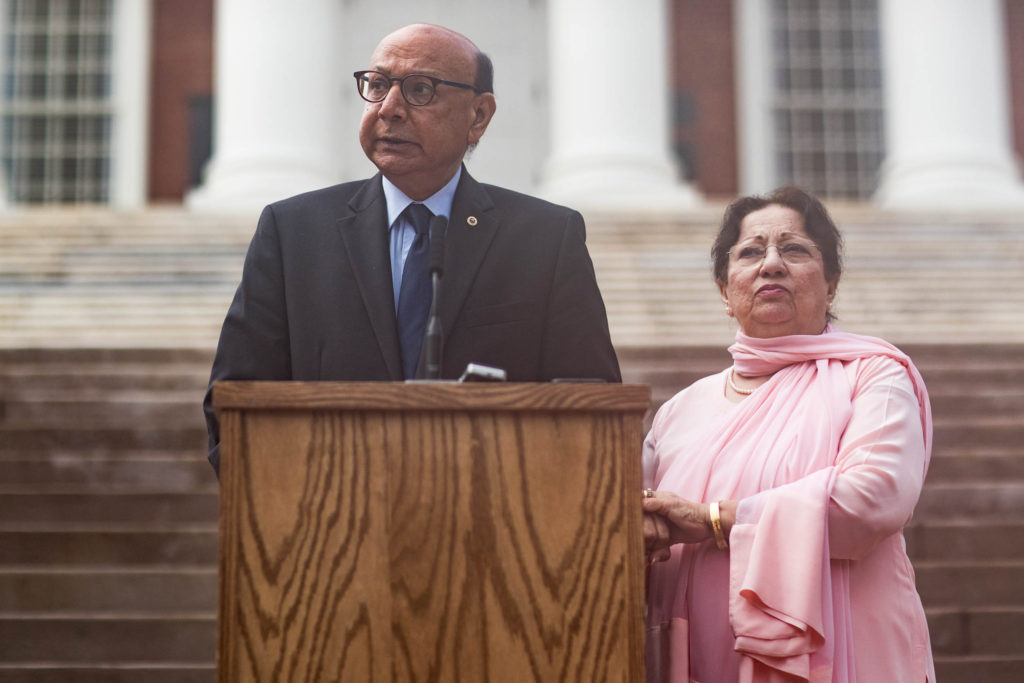
Khizr and Ghazala Khan announced the Humayun Khan Memorial Scholarship Fund at UVA.
Captain Khan was a brave American hero when it mattered most
It is worth discussing Captain Khan’s heroic actions when he made the ultimate sacrifice. Here is a brief description:
On June 8, 2004, Khan was inspecting a guard post when a suspicious taxicab began approaching too quickly. Ordering his subordinates away from the vehicle, Khan ran forward 10–15 steps and was killed by a suicide car bomb fitted with an improvised explosive device. The car detonated before it could reach the gates or the nearby mess hall where hundreds of soldiers were eating breakfast. Khan was also posthumously awarded the Bronze Star Medal and the Purple Heart and is buried at Arlington National Cemetery.
Plaque for Captain Khan that hangs on the Rotunda at UVA.
Several years ago, I participated in Veteran’s Day activities at a local elementary school. At that event, I shared the story of Captain Khan with the students. I explained the circumstances of his death and described three reasons why I believe he is a true American hero. It seems appropriate to share them this Memorial Day.
Captain Khan’s actions demonstrate three hero-like qualities
Captain Khan put others first. He ordered his troops to take cover to be safe while he assessed the situation. He thought about them before he thought about himself.
Captain Khan possessed the courage to face danger head-on. He did not shy away from it. It is not natural for us to put ourselves in harm’s way. In this case, he saved the lives of many by sacrificing his own.
Captain Khan built a legacy for others to emulate. His story of courage, bravery, and sacrifice should inspire us to greatness. I want to be better when I think of Khan and his sacrifice. I hope it does the same for you.
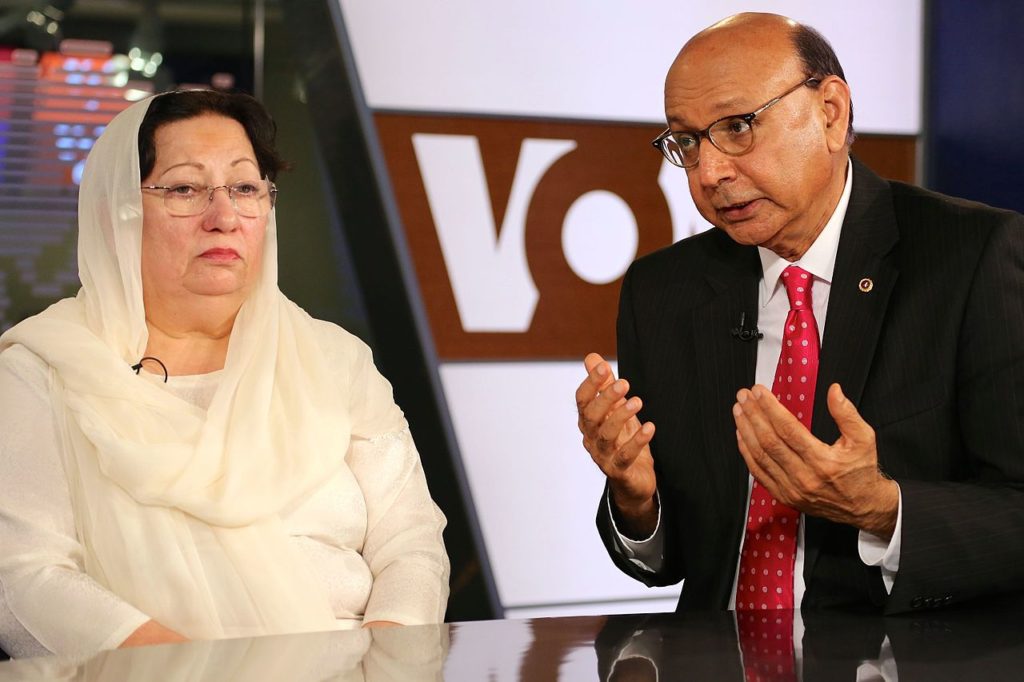
Captain Khan’s parents tell his story.
A real American Hero
I do not expect many of us ever to face a similar situation—Lord knows that I hope none of us ever do—but it is reassuring to know that we have heroes like Khan. Heroes do exist. They don’t wear capes, fly an invisible jet, or come from another planet. Rather, they are everyday people—like you and me. The difference is that they do extraordinary things when called into action.
In a twist of fate, my family used to live in the same house that the Khans owned when their son died. After we moved in, I met his family, and we exchanged letters multiple times. I will share that part of the story at another time. This blog post is about honoring a hero, Captain Humayun Khan, so I will end here.
There is no greater love than to lay down one’s life for one’s friends.