Can you clearly communicate with your stakeholders?

Have you ever worked for a leader who is a horrible communicator? No one trained him, and it showed. For example, I worked for one leader who did not know how to clearly communicate. He knew it, I knew it, everyone knew it. The organization put this leader in charge of a big change initiative. He floundered, and we all suffered while this leader struggled. He did not know how to clearly communicate. All his stakeholders were left in the dark wondering what was happening. As you might imagine – it was a painful experience for all of us.

Team meetings are torture with a leader who cannot communicate.

It is tough working for a leader who cannot clearly communicate

Another time I worked for a leader who was a daily disaster when it came to communications. He would speak at meetings, and everyone would cringe. No one was quite sure what in the world he was talking about, and neither was he. The organization ended up in complete chaos as a result of this leader’s inability to communicate and connect with his followers. At times he would explode in a meeting chastising his team for not doing things the way he wanted. Getting angry did not help the situation.

More volume does not fix bad communications.

The leader who replaced him was much better at communicating

Eventually, a new leader was put in place. This leader went to work right away fixing the communication problems plaguing the organization. She was an engaging speaker. She made sure all of her meetings had a clear agenda to include opening and closing comments that she prepared in advance. Her team understood what she wanted. Trust was restored. Performance improved rapidly. I watched in wonder as she turned around a bad situation in less than 90 days. It was a pleasure working for a leader who knew how to clearly communicate and connect with her followers.

The difference between mere management and leadership is communication.

Sir Winston Churchill

A novel framework for new leaders

All The Way Leadership! created a novel framework for new leaders. Fundamentally this framework communicates that it is vital for you to possess integrated integrity as a new leader. Having individual integrated integrity means that ‘who you are’ aligns with ‘what you say’ and ‘what you do’. If you do not demonstrate individual integrated integrity your team will not trust you, and your impact as a leader will be limited.  ‘Who you are‘ was covered in previous posts. Now ‘what you say’ will be discussed.

All The Way Leadership! Individual Integrated Integrity Framework. ©2020

Three key components comprise ‘what you say’

All The Way Leadership! believes every leader needs to understand that ‘what you say’ is important. ‘What you say’ as a leader is comprised mainly of three key components – communicating with stakeholders, presenting your ideas, and engaging your team members. Communicating with stakeholders is the topic of this blog. It can be difficult to do, especially if you are a new leader. Also, many senior leaders have a diverse set of stakeholders that brings its own challenges. For now, let’s focus on a simple model for communicating with your stakeholders.

What training do your team members need?
Clearly communicating with your stakeholders is vital for success.

A tool to clearly communicate with your stakeholders

As a leader, it is important that you clearly communicate to your stakeholders. It sounds easy to do. It is not. The amount of miscommunication that occurs on a daily basis in most offices is enormous. Think about how many times this week you participated in a discussion that ended without a clear understanding of what you should do next. One tool to help you is a simple framework for thinking about the best method to communicate with your stakeholders. It is found below. Take some time to select the best method before communicating, not after the fact.

Not all communication channels are the same.

Selecting the best method to clearly communicate

All The Way Leadership! recommends that all leaders take the time to select the best method for communicating. Your stakeholders will thank you later. Four communication methods are found below.

  1. Face to face (in person) – some topics should be discussed in person. This method is best for direct communication. Conduct all crucial conversations in person, if possible. It may be impossible to talk with someone in person. A video teleconference is another option, although it is not the same since you can not read body language.
  2. Instant message – use this method for informal exchanges. It is especially effective if you need a quick answer to an easy question. IM is much more common as a workplace tool nowadays. I know some senior leaders who refuse to use IM. That is a mistake. Don’t be a dinosaur when it comes to IM.
  3. Text message – basically this is IM on your phone. Use this method if you have an immediate need or want to provide a quick update. For example, I will text someone if I am going to be late for a meeting.
  4. Phone (1 to 1) – use the phone for formal discussions that you cannot do in person. Some of your stakeholders may not like talking on the phone much. They may prefer IM. Let them know to answer when you call because it is usually important.

Do your stakeholders answer your calls?

Two methods commonly used that cause the most problems

If you are a leader you are most likely participating in multiple group meetings and conference calls a day. You probably send and receive e-mails all day long. These two methods are effective but can cause problems if you are not thoughtful.

  • Conference calls – an efficient method for group discussions. Several modern productivity tools make it easy to get a group together for a virtual meeting. If it is your meeting – lead the discussion. Don’t let it devolve into a circus. The video below is funny, but also accurate about what can happen during a conference call. Be prepared.
  • E-mails – an effective method for both formal and informal communication with your stakeholders. It is a great way to loop others into a conversation and make virtual introductions. BTW – read your emails. How do you know what is happening if you have hundreds of unread emails? Don’t ignore your inbox and hope for the best.
This video is sadly accurate about conference calls.

Why selecting the proper method to clearly communicate matters

As a leader, you will participate in many different kinds of conversations. Some will be quick like getting a status update from one of your team members. Others will be more serious like sharing bad news with your boss. Take the time you need to select the proper method for clearly communicating with your stakeholders. For example, don’t talk about sensitive personal topics on a large conference call. Save that discussion for later when you can discuss the issue with the person directly. Trust me – selecting the proper method will save you many headaches. In the next blogs, I will share tactical tips and lessons learned about communicating with stakeholders.

Sensitive personal topis are best handled in person.

What about you?

Do you pay attention to ‘what you say’ as a leader? Have you taken the time to identify the best method for clearly communicating with your stakeholders? If not, make the investment now. If so, you will enjoy the next few blogs. We are going to explore how to clearly communicate with your stakeholders to include points to ponder, tactical tips and lessons learned.

Great leaders communicate and great communicators lead.

Simon Simek

ATW! is designed to make you a better leader

I hope you join me on this journey to raise up the next generation of leaders. The world is in desperate need of more great leaders. Women and men who lead with confidence, clarity, and creativity. It’s time to become the leader that your world needs. Let’s go All The Way!

All The Way Leadership!

How to ponder the results of your MBTI personality test

The team sat around the table. It was an off-site to complete strategic planning for the next year. They were making almost no progress at all. I joined the group to brief my portion of the event. You could feel the tension in the air. Simply put, this team was not getting along, and that needed to change. I asked all the participants to complete the MBTI assessment before the event. I recommended that each of them ponder their results. My role was to share the overall team profile and address common questions about the MBTI personality test.

Monitor team tension when you are the leader.

I am not an MBTI expert and do not pretend to be one

All The Way Leadership! believes that the MBTI is one tool of several available that anyone can use to learn about who you are. The 16 personalities web site provides a survey to help you determine your MBTI. It also includes a detailed report regarding your results. I recommend this site as an easy way to identify your MBTI. I am not an MBTI expert and do not pretend to be one. If you want to go deep into your MBTI find someone who is. Instead, I recommend that everyone complete the MBTI for self-awareness. All The Way Leadership! also views the MBTI as a filter for analyzing team dynamics. In the case I described above, their results made it clear that the team was experiencing several strong personality clashes.

MBTI will vary across most teams.

Most teams include different personalities which may create conflict

I showed the team their combined results using a graphic similar to the one shown below. It arrays the overall results of the team. I did not identify anyone by name. Instead, I simply used a smiley face icon to represent each member. We discussed the fact that the team included several divergent personality types. It is rare that you will see a team where all the team members have the same personality type. The most interesting fact for this team was that several of them were on different ends of the spectrum. The graphic makes that point clear. It is not unusual for a team like this one to experience tension across the group.

Notice the wide range of MBTI results of this one team.

It is important that leaders ponder their team’s overall results

I shared the good news first – groupthink was not going to be an issue. Next came the tough love – the team was not getting along because of who they were as people. The hard part is that you cannot change your personality. You are who you are. Instead, the team would need to deal with the tension directly. That sounds easy – it’s not. The team leader knew challenges lay ahead for the team. I finished the talk by answering questions that come up about the MBTI. The three most common are found below.

MBTI question #1- Is there a preferred personality type for strong leaders?

Really good news – no. All The Way Leadership! belives that anyone can become a strong leader. There is no single personality type that is the right one for leaders. Also, the idea of natural-born leaders is flawed. Some people may have more of a propensity to lead, but no one is born with the innate ability to lead better than others. Leadership is learned. If you look at the best leaders you will notice many different personality types, so don’t worry about your MBTI. You are who you are, and you can become an effective leader.

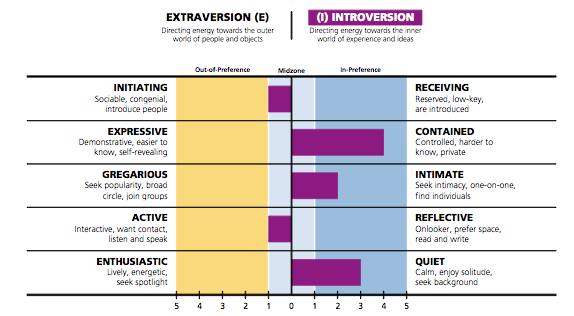
MBTI question #2 – What do I do if I am an introvert?

Even better news – don’t panic if you are an introvert. All The Way Leadership! believes that introverts can become strong leaders. Some people say that the most effective leaders are extroverts. They are wrong. Many of the best leaders are introverts. Sure – you need to work with people to be an effective leader. But, introversion does not mean that you do not like people. Instead, you get your energy in a different way than extroverts. The excellent TED talk by Susan Cain below goes into much more detail about introverts. BTW – I am an introvert.

Susan Cain’s TED talk has over 10 million views.

MBTI question #3 – What if I am dominant and overly task-focused?

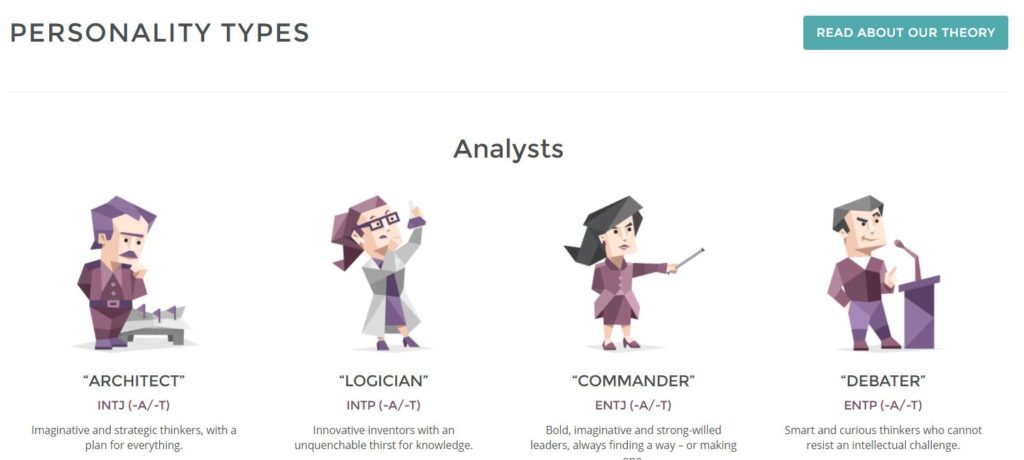
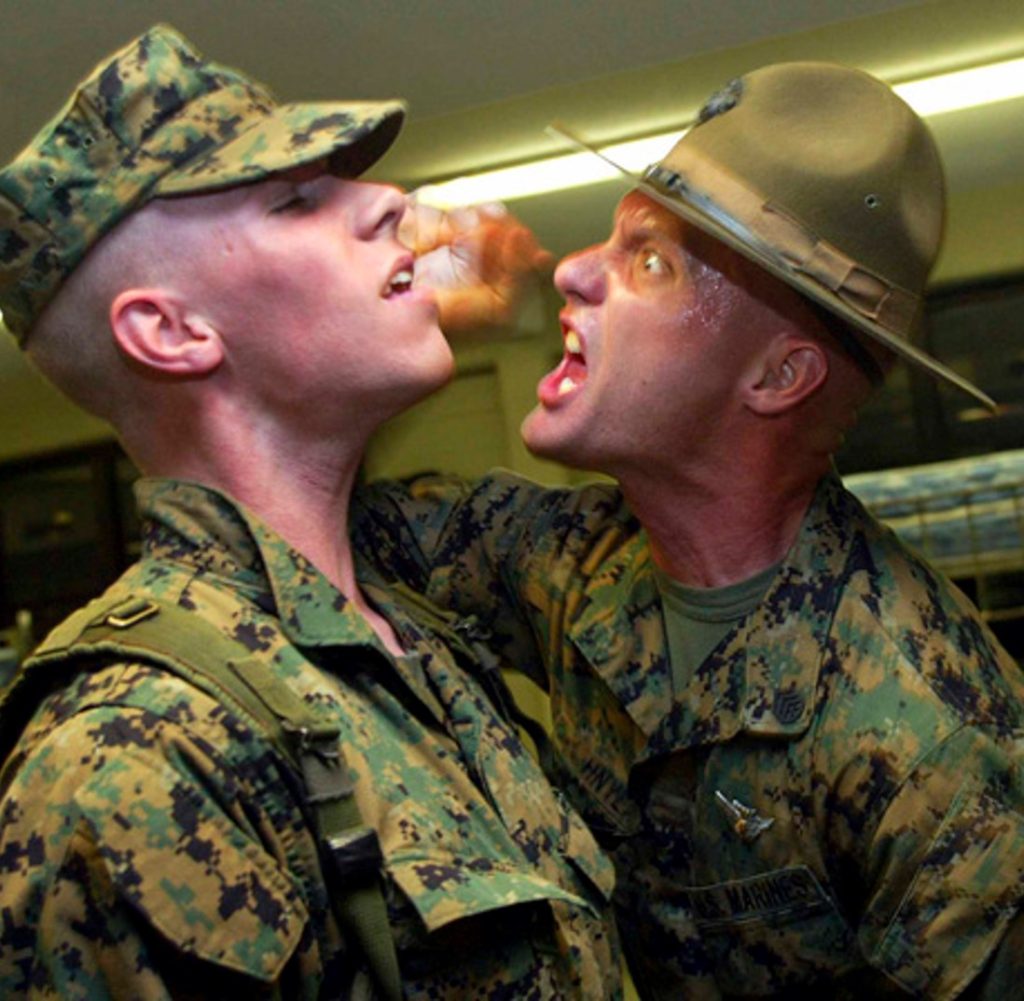
Unfortunately, the answer to this question is tough. Some people can be intensely dominant and overly task-focused. In other words – they focus solely on getting the work done…at all costs. People’s feelings and team morale are always secondary to the task at hand. They may achieve amazing results but tend to burn out their teams in the process. If that is you – be careful! Some situations require leaders who possess a driven personality type (e.g., ENTJ, aka the commander). The leader must drive the team hard. However, over the long-term, people matter. You better take care of your team if you want to be an effective leader. Otherwise, they will leave you, and find a leader who does care about them as much as the mission.

No one enjoys working for a drill sergeant.

What if I retook the test and have different results than before?

Several people I know received a different MBTI result when taking the test again. What should you do if this happens? I recommend going with the latest test result. I worked with summer interns for several years. After they joined the workforce and retook the test their results varied. It makes sense that you may see some changes when you are young. For more seasoned leaders, your results may change because you are right on the edge in one of the categories. For example, I was an extrovert the first time. More recently I scored as an introvert. I completed the Step II MBTI test. It provides more details for each facet. I recommend this version for veteran leaders. The reality is that I score in the middle between introvert and extrovert.

Your MBTI scores are comprised of multiple facets.

Take the time to ponder your MBTI results

It is vitally important that leaders understand themselves. The MBTI is a useful tool for gaining insight into who you are. All The Way Leadership! also recommends the MBTI as a way to analyze team member personalities and diagnose dynamics. In the next post, I will discuss some tactical tips and lessons learned about this topic.

Knowing yourself is the beginning of all wisdom.

Aristotle

ATW! is designed to make you a better leader

I hope you join me on this journey to raise up the next generation of leaders. The world is in desperate need of more great leaders. Women and men who lead with confidence, clarity, and creativity. It’s time to become the leader that your world needs. Let’s go All The Way!
All The Way Leadership!

Building trust with followers is what strong leaders do

Take a moment right now and think about a strong leader you know. Someone you truly enjoyed working for. Ask yourself a simple question about this leader. Do you trust her? I bet the answer is yes. Now think about a weak leader you know well. Someone you did not enjoy following. Ask yourself the same question. Do you trust him? Your answer probably changed to no. In fact, your answer may be hell no! It is difficult to follow someone you do not trust.

What trust score would your team give you as a leader?

The three hard truths about your personal integrity

All The Way Leadership! believes that integrity is a non-negotiable attribute for leaders. Simply put – if you do not demonstrate integrity your team will not trust you, and you are dead in the water as a leader. In a previous post, I advised that you never forget these three hard truths about your integrity

Your team is watching your every move – what will you do to build their trust?

A novel framework for new leaders

All The Way Leadership! created a novel framework for new leaders. Fundamentally this framework communicates that it is vital for you to possess integrated integrity as a new leader. Having individual integrated integrity means that ‘who you are’ aligns with ‘what you say’ and ‘what you do’. If you do not demonstrate individual integrated integrity your team will not trust you, and your impact as a leader will be limited.

All The Way Leadership! Individual Integrated Integrity Framework. ©2019

A constant leadership challenge

Building trust is a constant leadership challenge that requires attention. Strong leaders invest their energy into building trust with their followers. They do it in small ways like starting and ending meetings on time. And in big ways like providing top cover for their team members when things go wrong. No one ever enjoys being thrown under the bus, especially by their leader. Don’t be that kind of leader.

Most people are willing to follow leaders they trust

After spending decades in leadership positions you start to notice certain patterns. One that is readily apparent is that most people are willing to follow leaders they trust. The follower may not completely agree with every decision the leader makes, but they are willing to give a trusted leader the benefit of the doubt in many situations. It makes common sense. Team members trust that their leader is making decisions for the good of the team, and are willing to follow.

A trusted leader can take a team to new heights.

The opposite trend is also true

Let’s look at the opposite scenario. All The Way Leadership! believes that most people are not willing to follow a leader they do not trust. Why would they? Once again it makes sense that most followers would be skeptical of any leader they do not trust. After all – what if the leader is not competent. He does not know what he is doing. Sure – a team may follow because they have to, but they certainly are not going to put in any extra effort. Instead, they are going to think about what to do when disaster strikes.

Avoid making your team feel like they are walking on a tightrope.

It is difficult to truly trust someone you don’t know

Another dimension of trust is familiarity. How well does your team know you? Do they know about your expertise as a leader? Your experience? Your strengths and weaknesses? It seems like a lot for them to know. The reason to raise this point is that it is difficult to truly trust someone who you don’t really know. Think about it in your own life. How many people do you trust that you don’t really know? I bet the number is low.

Love all, trust a few, do wrong to none.

William Shakespeare, All’s Well that Ends Well

Context counts when it comes to trust

Sure – there are people you will trust without knowing them. In some cases, you never get the chance to learn about someone before you have to trust them. For example, you will trust the airline pilot on your next flight. You trust that she is competent at flying the plane and getting you to your destination safely. No – you will not have an opportunity to interview the pilot before your flight takes off. That situation is different than what is being described here. Your team will get the opportunity to evaluate you as the leader. They will decide whether or not to trust you.

How will others get to know you?

It is important that your team members get a chance to know you. No – they do not need to know the intimate details of your life. That would be strange. Rather they need to understand who you are. Your personality, your leadership style, and your pet peeves at a minimum. Each of us is different with a unique set of skills and experiences. Spend time with your team so that you can gain their trust. Remember trust is not a one-time transaction. Strong leaders understand the importance of building trust with their followers over time. Weak leaders ignore their team members and pay the price. Don’t fall into this trap. It is hard to fix later.

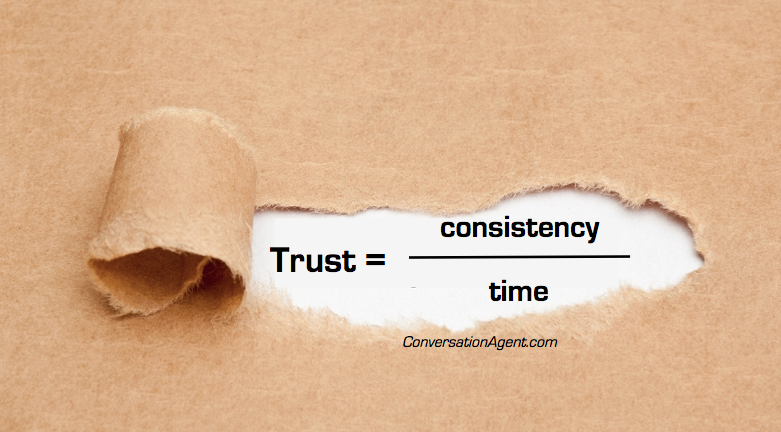
This equation is an excellent way to think about building trust.

What about you?

Are you building trust with your followers? Do you spend time with them so that they get a chance to know who you are? More importantly, do you know who you are…really? If not, then you have work to do. Don’t worry – All The Way Leadership! is here. The next blog post will focus on a commonly known tool to help you better understand your personality. After all – how can others get to know who you are if you are not sure of yourself.

ATW! is designed to make you a better leader

I hope you join me on this journey to raise up the next generation of leaders. The world is in desperate need of more great leaders. Women and men who lead with confidence, clarity, and creativity. It’s time to become the leader that your world needs. Let’s go All The Way!

All The Way Leadership!

Never forget these three hard truths about your integrity

I stood at attention as my company commander yelled. He was extolling our entire unit about the importance of physical fitness. He was emphatic. All paratroopers need to be in tip-top shape. No exceptions…no excuses. Over one hundred of us endured this speech. I was confused about why he kept going on and on. I completely agreed with him. We all concurred. Little did he know at the time that these words would come back to haunt him later. His integrity would become an issue. It was 1991. I was an Infantry Officer in the 82d Airborne Division, home of the All-American paratroopers.

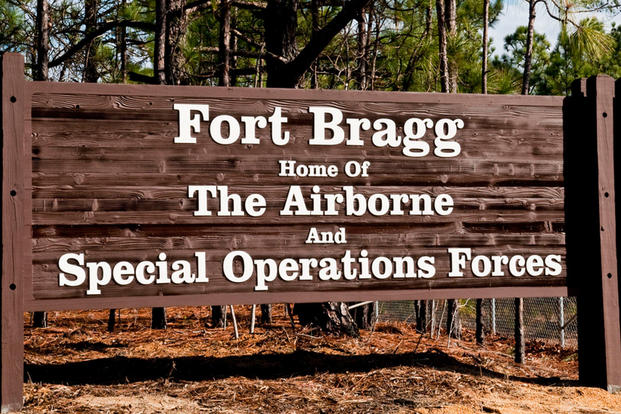
Entrance sign to Fort Bragg – Home of the Airborne.

He could not keep up with the pace

A few months later our company was participating in a battalion run. I do not recall exactly how long it was – probably four to five miles. The pace was challenging, but not severe. Our company commander was struggling to keep up. He was sweating profusely. He showed signs of complete fatigue. Several of his paratroopers yelled encouraging words. You can do it! Hang in there, sir. I was shocked by what happened next. He quit. Rangers don’t quit. He moved to the side of the formation and stopped running. One of my peers took his place at the front and we kept going.

I will never fail a fellow paratrooper. I cherish the sacred trust and the lives of men with whom I serve. Leaders have my fullest loyalty, and those who I lead will never, never find me lacking.

Airborne Creed

He embarrassed all of us

Officers do not fall out of running formations in the 82nd Airborne Division. It simply does not happen unless you become injured or physically sick. This run was the first time I saw a commanding officer not measure up. He was embarrassed, and so was his entire company. Afterward, he apologized to all of us. The harsh words from his speech a few months earlier came to mind. He was done as our leader, and he knew it. He probably did not understand it at the time, but he had violated the three hard truths about integrity.

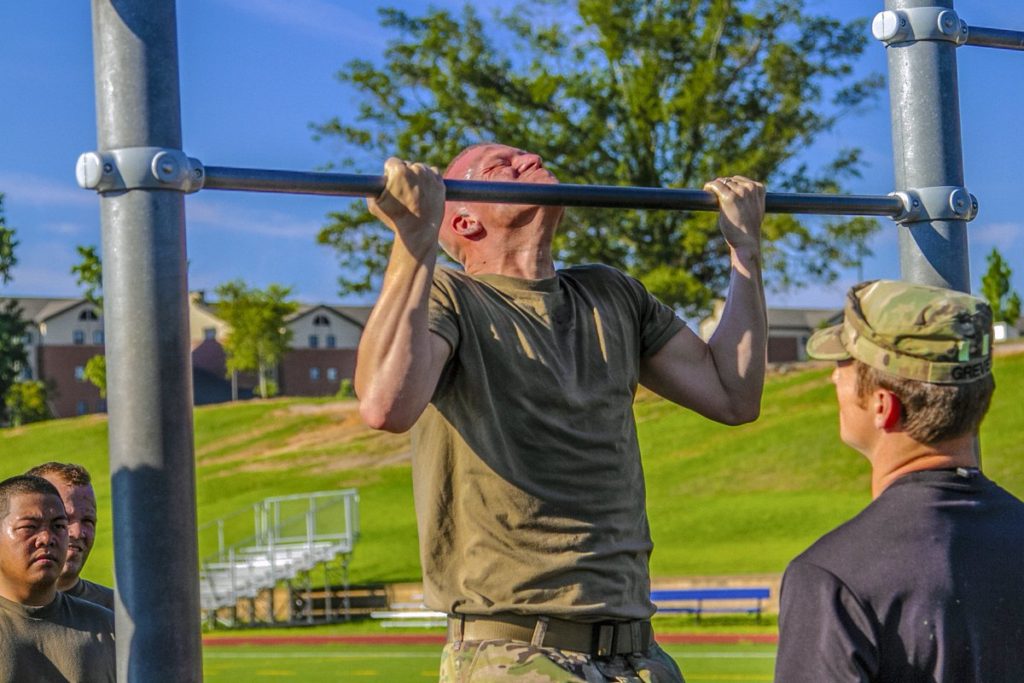
Physical standards for paratroopers are tough.

Truth #1 – Team members will pay special attention to your individual integrity as a leader

If you are a leader do not be surprised if your team members spend time and energy trying to figure you out. It is perfectly natural. As a human being, you want to know about the person in charge. Some want to know about how you lead. While others are interested in your background. What shaped you to be who you are today. A few will even wonder why you are in charge and they are not. All of them will be paying special attention to your individual integrity. Are you worth trusting, or not? I know this to be true because I faced this scenario as a new Army Officer and in every situation since then. If you ignore this truth, you will pay the price.

What training do your team members need?
Your team members will try to figure out ‘who you are’.

Truth #2 – They track three integrity attributes – ‘who you are’, ‘what you say’, and ‘what you do’

As a leader, your team members will be constantly gathering data about you. They will track ‘who you are’, ‘what you say’, and ‘what you do’. Many questions will run through the minds of your team members. A dozen examples are provided below.

  • What are you like…really?
  • What is your personality?
  • Are you a nice person?
  • What are your strengths?
  • What are your weaknesses?
  • Are you competent?
  • What do you want them to do?
  • Do you care about them?
  • What are your opinions?
  • What is the strategy?
  • Do you have a good plan?
  • How do you make a decision?

It probably does not seem fair that you face this much scrutiny as a leader. It isn’t. However, it is the reality you face. If you cannot handle it, then do not take a leadership role. Do something else. Your team deserves someone who wants the role at a minimum.

Becoming a leader is synonymous with becoming yourself. It is precisely that simple and it is also that difficult.

Warren Bennis

Truth #3 – If your three integrity attributes do not align, then the team will not trust you

As a leader, you want your integrity attributes (‘who you are’, ‘what you say’, and ‘what you do’) to align. Disconnects will lead to confusion with your team members. They may question your ability to lead because they do not trust you. Trust is crucial for a leader. In fact, it may be the most important thing you need as a leader. If your team does not trust you as a leader you will face difficult days ahead. Trust me – I have seen leaders violate this truth many times and it always comes back to bite them. Trust matters.

Simon Simek talks about leadership. Worth watching.

A simple example – ‘who you are’ does not match ‘what you say’

Let’s start with a simple example. You go to the gym and are assigned a personal trainer. He is your leader. You meet the trainer and the first thing you notice is that he is not in shape at all. He proceeds to tell you all the things you are going to do to get in top physical condition. The first thought you have is why should I listen to this trainer? If he cannot stay in shape himself, how in the world can he help me? His appearance does not match his words. Who is he? Certainly not an athlete. This disconnect bothers you. You may ask for a different trainer. I know I would.

Would you want this guy as your personal trainer?

Another easy example – ‘what you say’ does not match ‘what you do’

In this example, you work for a leader who is adamant that everyone shows up to work early. She tells your team that all of you have to be in the office no later than 8 AM every day, to include Fridays. No excuses. She punishes those who show up late. After a few weeks, you and your team members start to notice that your boss usually arrives at work around 9 AM, and even later on Fridays. You become disgruntled because there is a double standard. One that you cannot do much about until you are in charge. Make a mental note – your team will hold you to the same standard of integrity.

Some leaders obsess about showing up on time.

One final example – my poor company commander was a hot mess

Let’s finish where we started – my company commander’s speech. He was doomed to fail. He did not think about how his followers viewed him as a leader. They were constantly sizing him up and found him wanting. He underestimated how much attention they paid to ‘who he was’, ‘what he said’, and ‘what he did’. He was not an athlete. You could tell by looking at him. Imagine the response from those in the audience that day who stayed in top physical condition as he waxed poetic about working out. They probably thought he was an idiot. Eventually, my commander’s integrity flaws came to light when he quit the run. He never recovered from that fall and ended up getting fired for other integrity problems that surfaced later.

Never shall I fail my comrades. I will always keep myself mentally alert, physically strong and morally straight and I will shoulder more than my share of the task whatever it may be, one-hundred-percent and then some.

Third stanza of the US Army Ranger creed

What about you?

Are you paying attention to your personal integrity? Do your integrity attributes align? Does ‘who you are’ align with ‘what you say’ and match ‘what you do’? If so – excellent. Keep up the great work. If not – do something about it. Don’t confuse your team members and erode their trust.

ATW! is designed to make you a better leader

I hope you join me on this journey to raise up the next generation of leaders. The world is in desperate need of more great leaders. Women and men who lead with confidence, clarity, and creativity. It’s time to become the leader that your world needs. Let’s go All The Way!

All The Way Leadership!

Strong leaders promote diversity and destroy divisions

All the Way Leadership! draws its heritage from the 82nd Airborne Division. I learned a lot while serving there. Lessons that helped make me a better leader. For the month of May, I am sharing the top leadership lessons I learned while serving as an All-American paratrooper. Two weeks ago I wrote about the first lesson – why the best leaders go out the door first. Last week I wrote about the second lesson – why the best leaders train until it hurts. Below is the third lesson. It is about diversity – a controversial topic.

Modern leaders must deal with diversity and division

In our country right now, there is a lot of discussion about diversity and division. Racial tensions are high. We are having a debate about our history. Who should we honor? How should our shared past be remembered? What about the Confederacy, and its leaders? What about the founding fathers? Can we have monuments to those who built our country without erasing the ugly parts of US history? How do we move forward without tearing the country apart? Great questions that do not have easy answers.

Racists gather in front of the Rotunda located at University of Virginia

Diversity is tough and complicated

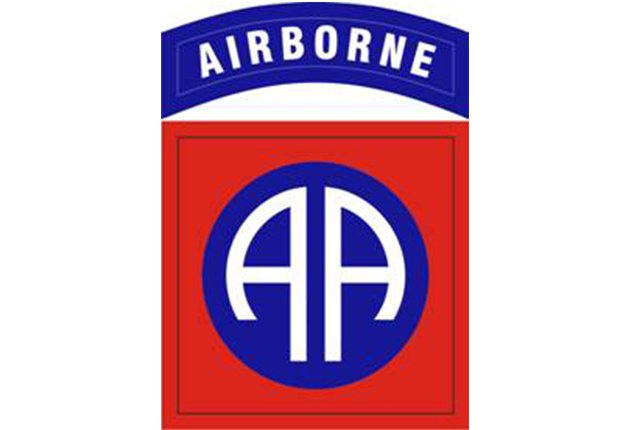
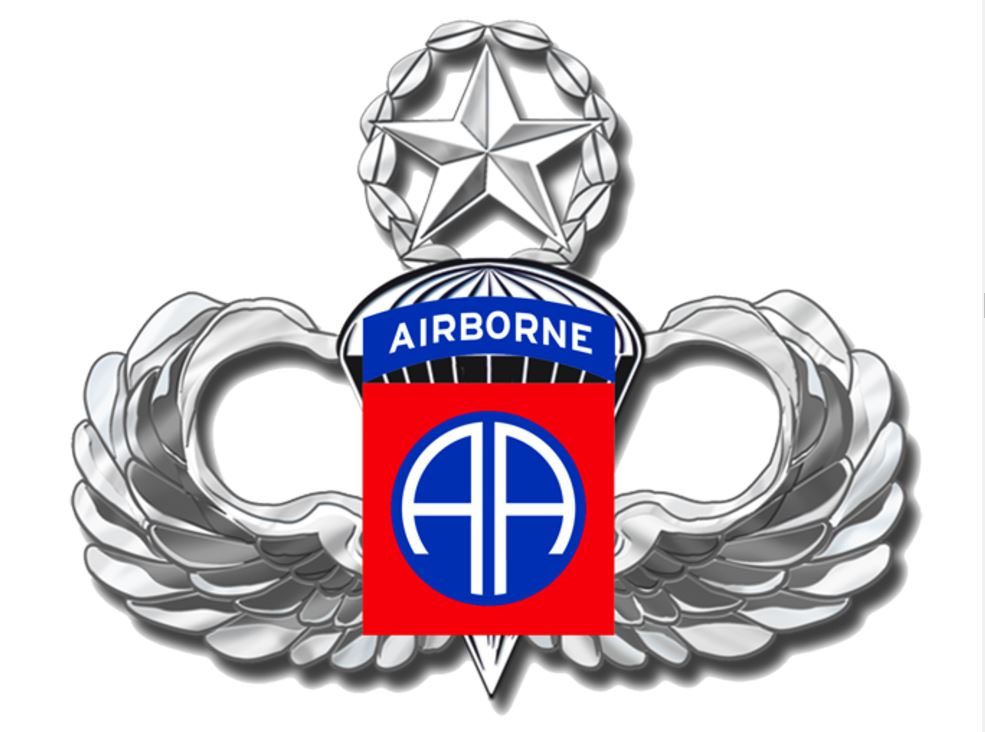
I do not pretend to have all the answers. I do understand diversity because I have seen a successful model before while serving in the 82d Airborne Division which is also known as the All American Division. It was constituted, originally as the 82nd Division 100 years ago, shortly after the US entered into World War I. Since its initial members came from all 48 states, the division acquired the nickname All-American, which is the basis for its famed “AA” shoulder patch that is pictured below.

82d Airborne Division patch
82d Airborne Division patch – the AA on the patch stands for All-American

Leaders should promote diversity – it is a force multiplier

When I arrived in 1991 it was still known as the All-American division because its members came from all parts of the US. We had paratroopers from every state, every US territory, various education levels, economic backgrounds, race, gender, creed, and religion. You name it and there was probably someone in the 82nd with that background. We were all different and we were all paratroopers.

I will never fail a fellow paratrooper. I cherish the sacred trust and the lives of men with whom I serve. Leaders have my fullest loyalty, and those who I lead will never, never find me lacking.

Line from the Airborne Creed

Nostalgic perspectives are not helpful

I am not going to pretend that everything was perfect. We had our challenges, but somehow our diversity was not a stumbling block. Rather it was a strength. Everyone brought their best to accomplish the mission. It was an important phase of my life when I learned that people from very different backgrounds can work together successfully. When I reflect on that time I think there are three reasons why diversity was and is a force multiplier in the All-American division.

1. Leaders come from all walks of life

The first battalion I served in, 1st Battalion of the 325th Airborne Infantry Regiment, had officers from several sources. There were numerous West Point graduates, many ROTC officers, and prior-enlisted soldiers who were commissioned through the Officer Candidate School. The diversity of our Non-Commissioned Officers was even greater. It did not matter much where you came from because leadership is not an inherent trait that only a few possess. There is not an elite segment of American society that provides leaders for the rest of us. No, our leaders come from all over the country. It has been that way since the birth of our nation.

We hold these Truths to be self-evident, that all Men are created equal, that they are endowed by their Creator with certain unalienable Rights, that among these are Life, Liberty, and the Pursuit of Happiness.

United States Declaration of Independence

Leadership can be learned

I saw this first-hand in the 82nd. I learned about leadership from numerous mentors and watched others learn and grow during their time in the division. We were taught important lessons like leaders set the example, and leaders go out the door first. Leadership lessons that stayed with me. The good news is that any of us can learn to be an effective leader – no matter your background. If you don’t believe me, watch this short video.

2. Standards are standards – leaders enforce them

All US Army paratroopers are expected to meet stringent standards. No one gets any slack. When I say no one, I mean no one. Does not matter if you are enlisted, an NCO, or an officer. Does not matter if you are black, white, yellow, Catholic, Protestant, Jewish, Wiccan, male, or female. You either meet the standard, or you don’t. If you don’t, then you are sent away.

There’s a lot of things you’re going to see here that are a little messed up or a little different. Don’t try to change it. We’re the 82nd Airborne and that’s the way we do it. We like it that way.

Quote from article 12 Reasons Why Paratroopers Do It Better

It starts in Airborne school, continues with Jumpmaster school, and various other airborne training events you are required to complete in order to be a member of the All-American Division. These demanding standards cause a positive effect. It builds trust. You trust everyone else on the plane during a jump because you know that they have what it takes to be a paratrooper. In case you are not familiar with what it takes to become a paratrooper – this video explains the training. It is old but still accurate.

Hold yourself accountable to the standard

Nowadays it seems like some people are always looking for shortcuts to success – hacks for life. I am a big fan of trying to figure out ways to improve my performance by working smart versus just working hard. Many experts can help teach you better ways of doing things. But, make sure you are not cutting corners to get around standards. They exist for a reason – to make sure you are proficient. You build trust with your team members and demonstrate that you have what it takes. Remember – if you are a leader and cut corners, then your team members will do the same. Don’t be that kind of leader. Set the example by meeting the standards.

Commanding General Gavin carried a rifle in WWII which was uncommon.

3. Paratroopers bleed the same colors – red, white and blue

I have served in other US Army units, and they don’t have the same camaraderie as the All-American Division. It is a special place. My observation is that paratroopers understand that we all wear green uniforms, maroon berets, and bleed the same colors. When I was at Fort Bragg, the community experienced several tragic events to include two planes colliding that resulted in the untimely death of numerous paratroopers in the 82d. I recall the sadness of that event and the heroic deeds of many during and after the accident.

It was difficult days for the Division

Everyone came together in a special way to make it through. Nothing new for paratroopers – we have been doing this for over 100 years. The current Division Commander recently gave a speech about the unit that is well worth watching. It sums up what I said above. Paratroopers bleed the same colors – red, white and blue.

ATW! is designed to make you a better leader

I hope you join me on this journey to raise up the next generation of leaders. The world is in desperate need of more great leaders. Women and men who lead with confidence, clarity, and creativity. It’s time to become the leader that your world needs. Let’s go All The Way!
All The Way Leadership!

Why the best leaders train until it hurts

In 2017 the 82nd Airborne Division celebrated its 100th anniversary. The 82nd is a great unit. I learned a lot while serving there. Lessons that I have leverage over the years. I am sharing the top leadership lessons I learned as an All-American paratrooper in the 82d Airborne Division. Last week I wrote about the first lesson – the best leaders go out the door first. Below you will find the second lesson.

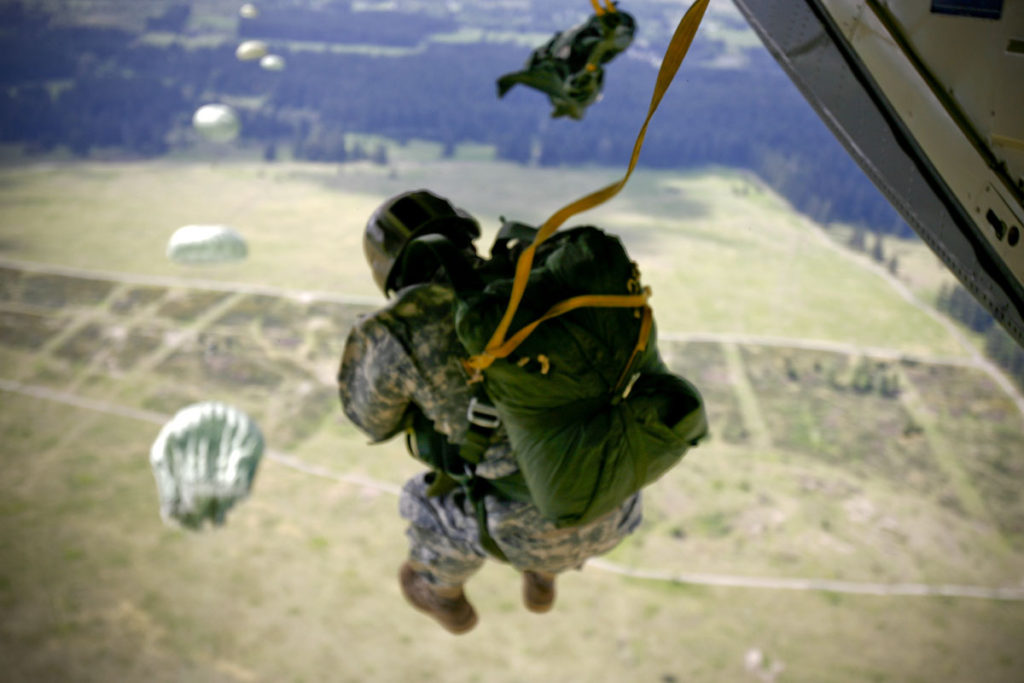
It takes a lot of training to learn how to jump out of a perfectly good airplane.

Lesson two – leaders train until it hurts

The mission of the 82nd Airborne Division is to, within 18 hours of notification, strategically deploy, conduct forcible entry parachute assault and secure key objectives for follow-on military operations in support of U.S. national interests. In other words, the division goes wherever it is needed to deal with the enemies of our country. Simply put – you have to be prepared to deploy anywhere in the world at a moment’s notice. You are constantly preparing for war. It is what you do day in, and day out. This short video shows what the 82nd does to help keep our country safe.

Take care of your paratroopers

My father served in the 82d as an Infantry Lieutenant. When I arrived at Fort Bragg, I did know what I was supposed to do. I was school trained but lacked experience. I had completed the Infantry Officer Basic Course, Ranger School, and Jumpmaster School at Fort Benning. The Army prepared me as a young officer but I lacked confidence. I called my dad seeking advice about how to be successful at Fort Bragg. My father emphasized above all else that “if you take care of your paratroopers they will take care of you”. I asked him what is the best thing you can do to take care of troops. His answer was firm – don’t coddle them. Train them hard so that they are prepared for war. You must learn to train until it hurts, and then keep going. Tough love from my dad.

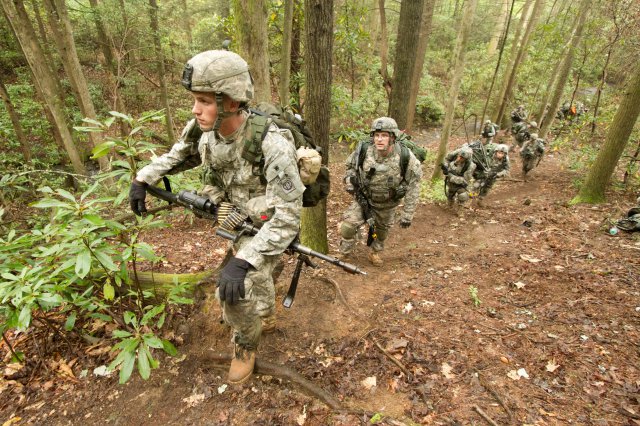
Paratroopers training in the mountains to prepare for combat.

In the business world, you must take care of your team

I have been in the business world longer than I was in the military. I can say with much confidence that the same advice my father offered me as a young officer is true for the business world. If you are going to be successful as a leader you must take care of your team. If you do, they will take care of you. The opposite is also true. Neglect your team and it will fall apart.

What training do your team members need?

Training my body so that I was ready for action

Training became a major emphasis for me during my time at Fort Bragg. First, I increased my physical training. Paratroopers have to be in shape. Jumping from an airplane can be physically demanding. You must be able to jump with your equipment (which weighs well over 50 pounds with a full combat load) and carry it with you wherever you go after landing. My unit conducted physical training every single morning. We did lots of push-ups, sit-ups, pull-ups, and other calisthenics. We ran a lot – miles and miles every week. The training had a specific purpose – get us into fighting shape.

You do lots of pull-ups as a paratrooper.

Getting in the best shape of my life

I worked for one company commander who had the officers perform physical training separate from our troops. At first, I thought it was odd. Shouldn’t we train with our platoons? He said the NCOs would take care of that – he was right. What I learned is that he trained us even harder than the troops. Many mornings we would start a run without knowing how far we would go. He didn’t know either. We simply ran until he got tired…which felt like never. All this physical training worked. I ended up being in the best shape of my life, fully prepared for the physical demands of airborne operations. I did not enjoy the pain of all that physical training, but it was necessary. As this video shows, running is a tradition for everyone in the 82d Airborne Division.

What training do you need to be prepared?

What about you? As a leader what skills do you need? Are you prepared for action? If the answer is yes, then good for you. Keep pushing and training hard so that you continue to mature as a leader. If not, you better get started. Your team deserves a competent and confident leader. No one likes working for someone who does not know what they are doing. If you lack the skills to lead, your team members will start to look for other opportunities. Or, they will wait for you to fail and hope you get replaced. Neither one of these scenarios is good for you. Avoid those outcomes, and do what it takes to be an effective leader. Train yourself first.

What leadership training do you need for success?

Make the most of every training opportunity

Next, I focused on operational training for my platoon. We spent a lot of time in the field and performed many airborne operations. It is difficult to simulate what it is like to jump out of a plane fully loaded with equipment, so we practiced on a regular basis. When I served as the Division Assault CP Commo Platoon Leader my unit jumped a lot – much more than most. And when we jumped – it was almost always with all of our combat equipment. Sometimes a unit will jump with only their parachutes, not their field gear. These jumps are referred to as “Hollywood” jumps.

Jumping without a lot of equipment is easier than the real deal.

Train as you fight whenever possible

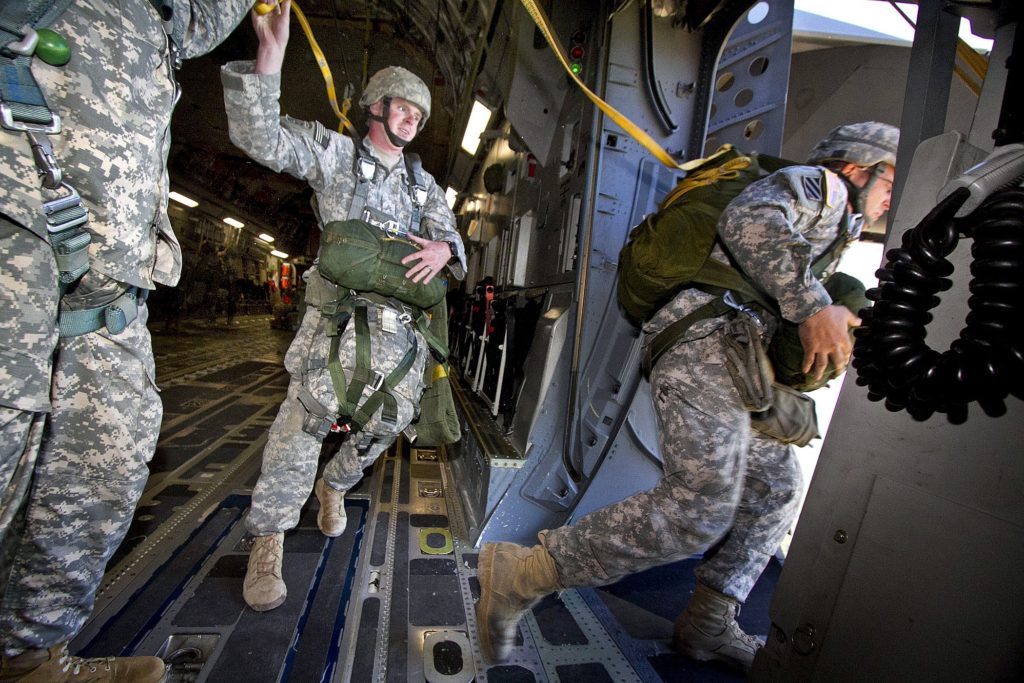
“Hollywood” jumps are worthwhile training. But, as you would imagine, they are much easier than combat equipment jumps. My platoon jumped with our equipment all the time because I wanted to make sure they could handle the heavy loads we had to carry. The more practice the better was my approach. Occasionally I would hear grumbles from my platoon, but all that training paid big dividends when we performed full-scale airborne operations. My platoon was always prepared and performed magnificently when it counted. Tough love pays off.

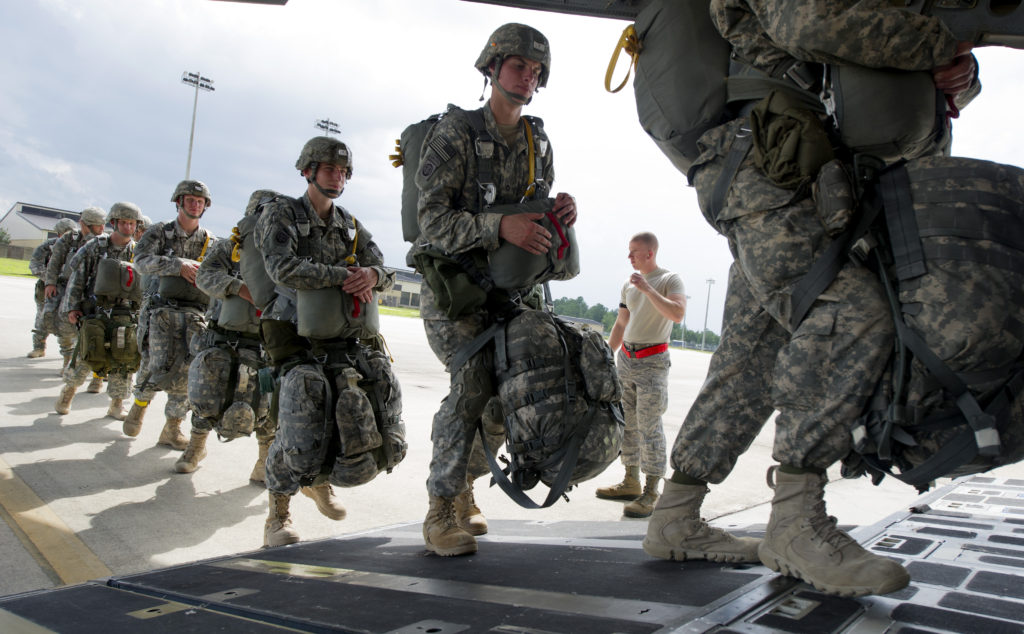
Paratroopers loading the plan for a jump with full equipment. (U.S. Air Force photo by Tech. Sgt. Bradley C. Church/Released)

Are you training your team for success?

Do you take every opportunity that you have to train your team? It is easy to simply go through the motions. It is more difficult to train your team whenever you get a chance. They may moan and groan about it, but their performance will improve over time. No one gets better by thinking about what it takes to improve. You get better with practice, lots and lots of practice. To me, training makes a huge difference between success and failure. Good leaders train their teams so that are always improving, preparing for the next big challenge. Bad leaders do not. They let their team become lazy and complacent. Don’t be that kind of leader.

I fear not the man who has practiced 10,000 kicks once, but I fear the man who has practiced one kick 10,000 times.

Bruce Lee

Be sure to push yourself and the envelope

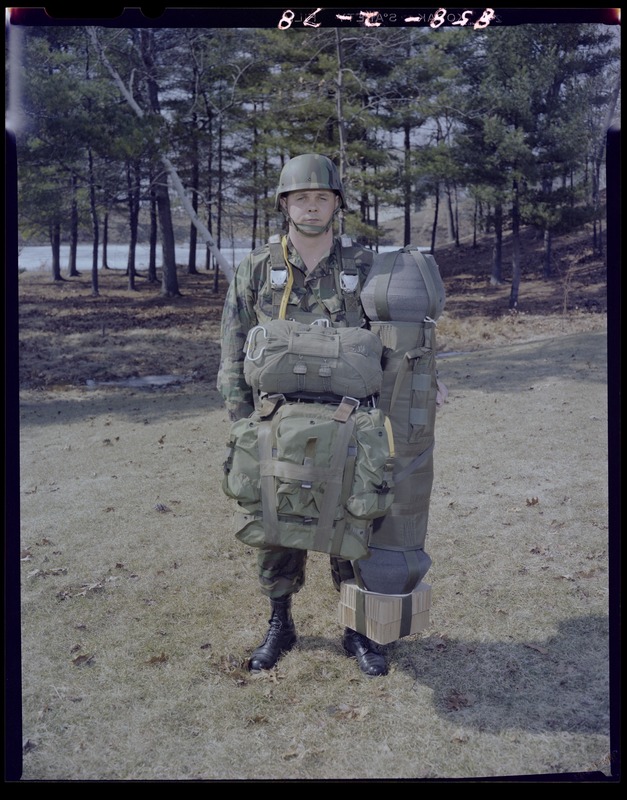
I pushed the envelope when it came to the equipment we used. We would experiment with our gear to try and get the best performance possible. Once I remember that we were having trouble getting a strong connection with our satellite radios, so we decided to jump with a much larger antenna than normal. The larger antenna would not fit into a normal rucksack or equipment bag. We had to pack it inside a Dragon Missile Jump Pack (DMJP). That meant somebody had to jump the DMJP. Several of us went through the special training required to jump this piece of equipment. In case you are not familiar with what the DMJP looks like – there is a picture below. It is a big piece of equipment, and awkward as hell to jump.

Dragon Missile Jump Pack
Dragon Missile Jump Pack is almost as tall as the jumper.

The dreaded dragon missile jump pack

Well, it came time for our next airborne operation and it was decided we would jump the larger antenna. I volunteered to jump the DMJP since leaders go out the door first. Man oh man was that jump an adventure. I immediately went into a rapid spin after exiting the aircraft door. My risers were twisted all the way down to my neck. I bicycle kicked and pulled at my risers to clear the twists. That step seemed to take forever. I almost panicked.

Some exits from the aircraft are ugly like mine was.

I could not tell how high off the ground I was

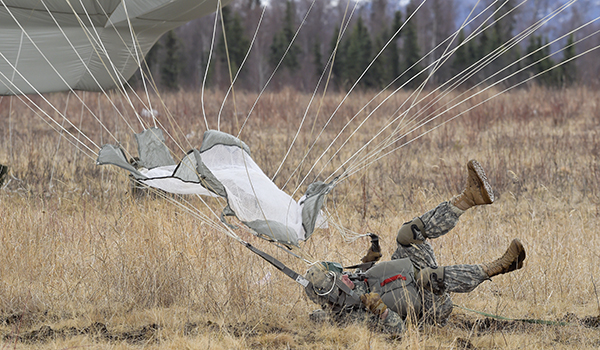
I decided to lower my rucksack and then the DMJP to avoid landing with it which would have been painful. When the DMJP reached the end of my lowering line I started oscillating more than normal. Swinging back and forth like a pendulum – not good for landing. I heard my equipment reach the ground. I hit next. Ugly landing – hit like a ton of bricks. Damn that hurt. Good news – the antenna worked well and the operation was successful. Bad news – I was sore for the next week. That landing hurt.

Paratroopers practice landing to get ready for the real thing. (U.S. Air Force photo/Alejandro Pena)
Some parachute landings are painful.

You set the example as a leader

Afterward several of my troops asked me about the jump. How did it go? I lied and told them that it went fine and the landing did not hurt much. Why would I stretch the truth…because I had been taught to train until it hurts, and then keep going. What can you learn from this leadership lesson? Training counts and makes a big difference. Figure out what kind of training you need to be successful, and then get after it. One final thought – don’t jump the DMJP. It sucks – trust me.

https://www.youtube.com/watch?v=yXm_kBdu_94

ATW! is designed to make you a better leader

I hope you join me on this journey to raise up the next generation of leaders. The world is in desperate need of more great leaders. Women and men who lead with confidence, clarity, and creativity. It’s time to become the leader that your world needs. Let’s go All The Way!
All The Way Leadership!

The best leaders go out the door first

I spent over a decade serving as an Officer in the US Army. I learned a lot in the Army, especially during my first tour with the 82nd Airborne Division. The division was created in World War I. It is a famous unit with a storied history. It also has a special place in my family’s heritage. My father served in the 82nd Airborne after graduating from West Point. It was his first duty assignment as an Infantry Officer. He reported to Fort Bragg in 1956.

My father served multiple tours at Fort Bragg, North Carolina.

I followed in my father’s footsteps

Many years later I followed in my father’s footsteps. I joined the 82nd in 1991 as an Infantry Officer. My first assignment was a rifle platoon leader in Bravo Company, 1/325 Airborne Infantry Regiment. After that role, I transferred to the Signal Corps and joined the 82nd Signal Battalion. I served as a Signal Node Platoon Leader and Division Assault Command Post Platoon Leader. Yes – I was a platoon leader three different times. I finished my time at Bragg as a Company Executive Officer.

Photo from my promotion ceremony circa 1994.

The 82nd is a great unit

It is a challenging place to work. All that experience helped make me a better leader. For the next several weeks, I plan to share the top leadership lessons I learned while serving as an All-American paratrooper in the 82d Airborne Division. Below you will find the first one.

Leaders jump first then others follow

Lesson one – leaders go out the door first. The 82nd has a unique culture, full of traditions that have been created over the years. One tradition regarding their leaders is that they jump first during airborne operations. This tradition started back in WWII. What does that mean – leaders jump first. Basically, the most senior leader of any airborne operation will go out the door first, before anyone else. For example, if the Commander of the 82d (a two-star general) is part of a jump, he will jump first followed by the rest of the paratroopers.

Leaders jump first to show their commitment to the mission.

This tradition dates back to World War II

During WWII legendary commanders like Matthew Ridgway and James Gavin jumped and fought alongside their paratroopers. No cushy office for them. This act is not one of privilege, but rather of leadership in action. This tradition visibly shows all the paratroopers in the plane that you are willing to lead them by going first. The 82nd expects danger when they jump into combat. Its leaders are expected to face this danger first. This tradition clearly demonstrates that the leaders are willing to do what they are asking their followers to do. It is a powerful way to show others that I am with you and fully committed, just like you.

General James Gavin getting ready to jump
General James Gavin getting ready to jump before Normandy.

A personal example of this lesson from my career

I learned this lesson firsthand while serving as the Division Assault CP Platoon Leader. My platoon’s mission was to support the Division Command Group with communications capabilities. We jumped in the radio equipment that the Divison Commander and other senior leaders used on the drop zone during airborne operations. Many times we jumped from the same plane as the Commander. He would go out the door first, followed by his Aide, and then members of my platoon. For larger airborne operations that involved many planes, my platoon would be split into small groups and jump from several different aircraft. We would be one of the first to leave the plane so that we would land near the command group members.

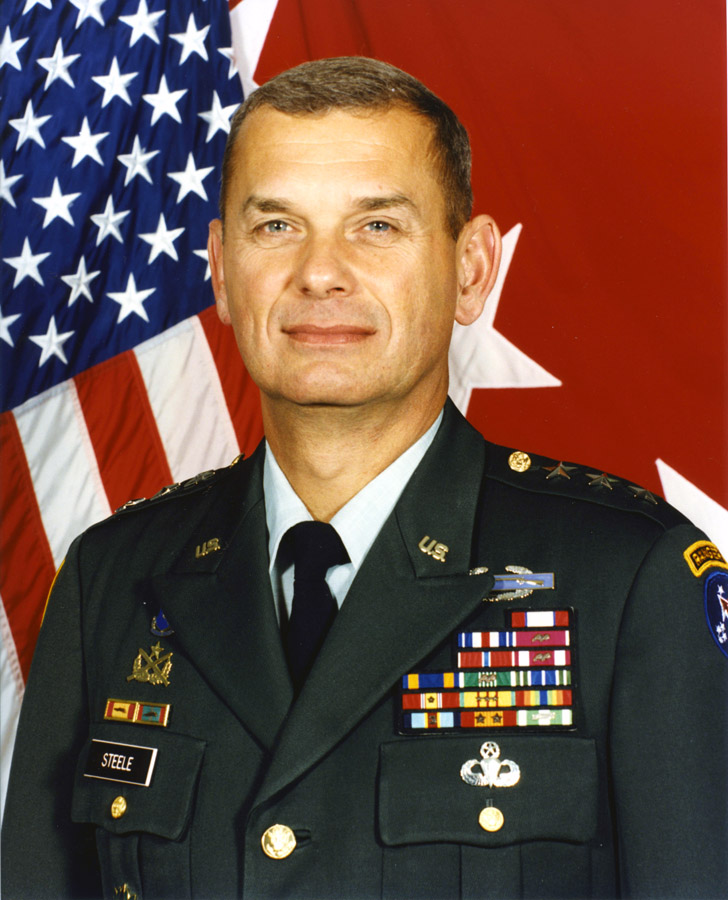
Mike Steele - 82nd Airborne Division Commander. He served with my father in Vietnam.
Mike Steele – 82nd Airborne Division Commander that I supported. Great man. He served with my father in Vietnam.

Jumping into Puerto Rico was an adventure

I remember one mission where jumping first was somewhat troubling to me. For this operation, we were jumping into Puerto Rico. The drop zone was not big so we jumped from C-130s. The Division Commander was on the first airplane. I was on the second plane and would be the first jumper from that aircraft. Everything en route went fine. As we approached Puerto Rico, the Jumpmaster gave me the command to “stand in the door”. That means I am positioned in the door, waiting for the jump light to turn green. When it does, you jump.

Paratrooper jumping out a perfectly good airplane.

Waiting can feel like an eternity

Usually, you stand in the door for less than 30 seconds. As you stand in the door of a C-130 you can see out of the aircraft. When I looked out I noticed a potential problem – all water, no land. I am a good swimmer, but I certainly did not want to experience a water landing. I peered at the jump light – it was still red. Thank God. I watched and waited, hoping that the light would not turn green until we were over land. I kept waiting for what seemed like an eternity.

Jumping at night can be particularly frightening.

You jump when the light finally turns green

Eventually, I saw the land, then the drop zone, green light, and I jumped, followed by my fellow paratroopers. What I learned later was that the jumpmasters decided to put the first jumpers in the door earlier than normal because there was real concern that all the jumpers would not be able to exit the aircraft in time because the drop zone was so small. They did not want any paratrooper to miss the drop zone, and have to ride all the way back to Fort Bragg.

Paratroopers with the 82nd Airborne jump from C-130 Hercules aircraft during a mass-tactical airborne training exercise which included over a thousand paratroopers. (U.S. Army photo by Sgt. Michael J. MacLeod)
82nd paratroopers jump from C-130 Hercules aircraft during a mass-tactical airborne training exercise which included over a thousand paratroopers. (U.S. Army photo by Sgt. Michael J. MacLeod)

Reflecting on the lesson I learned during this operation

After the operation was complete I thought to myself what would have happened if the light had turned green while we were still over water. I knew the answer – I would have jumped. I would have done what paratroopers have been trained to do for decades. The light turns green, and then you jump. I could not turn to the paratrooper behind me and say why don’t you go first, it looks kind of dangerous with all that water.

Jumping into an airfield can also be dangerous – lots of pavement.

Leading from the rear is not an option

No – I had been trained as a leader in the 82d that you jump first, and deal with whatever happens next. You lead from the front, not from the rear. That lesson has served me well in many other situations. Sometimes when I find myself in a somewhat scary situation I think of my days in the 82nd, and what it taught me as a leader. You go out the door first.

The reality is that the only way change comes is when you lead by example.

Anne Wojcicki

Are you ready to go out the door first?

What about you? Are you ready to go out the door first? Are you fully committed to the mission of the team you lead? I hope so. If you are committed and competent others will follow you. If for no other reason to see what happens. Not that kind of leader? Don’t be surprised if your team members are reluctant to follow you. None of us like working for someone who does not lead by example. Don’t be that guy. Instead, be the kind of leader who goes out the door first.

The place for a general in battle is where he can see the battle and get the odor of it in his nostrils. There is no substitute for the general being seen.

General James Gavin, 82nd Airborne Division Commander during WWII

ATW! is designed to make you a better leader

I hope you join me on this journey to raise up the next generation of leaders. The world is in desperate need of more great leaders. Women and men who lead with confidence, clarity, and creativity. It’s time to become the leader that your world needs. Let’s go All The Way!

All The Way Leadership!


Great leaders learn and get better every year

The University of Virginia’s men’s college basketball team is going to the final four. They have not been there since 1984. That is 35 years ago. I was a young man back then. It has been a long journey for my favorite team. Full of ups and downs…and a few big losses. None bigger than the one last year that abruptly ended their season. Yet, somehow they were able to pull it off this year. In this post, I will explore the reasons why they are better this year. As you might guess – it boiled down to leadership.

UVA men’s basketball team celebrate making the final four.

Last year’s season was magical

The 2018 season was a magical one for the UVA men’s basketball team. They finished with over 30 victories. They won the Atlantic Coast Conference (ACC) tournament beating rival North Carolina in the finals. UVA entered the NCAA tournament as the #1 ranked team in the nation. They were riding high and looked unstoppable. I was confident that they would win the tournament. I told all my friends to pick them. Then disaster struck.

UVA was ranked #1 going into last year’s tournament.

Last year’s NCAA tournament was a train wreck – they should have done better

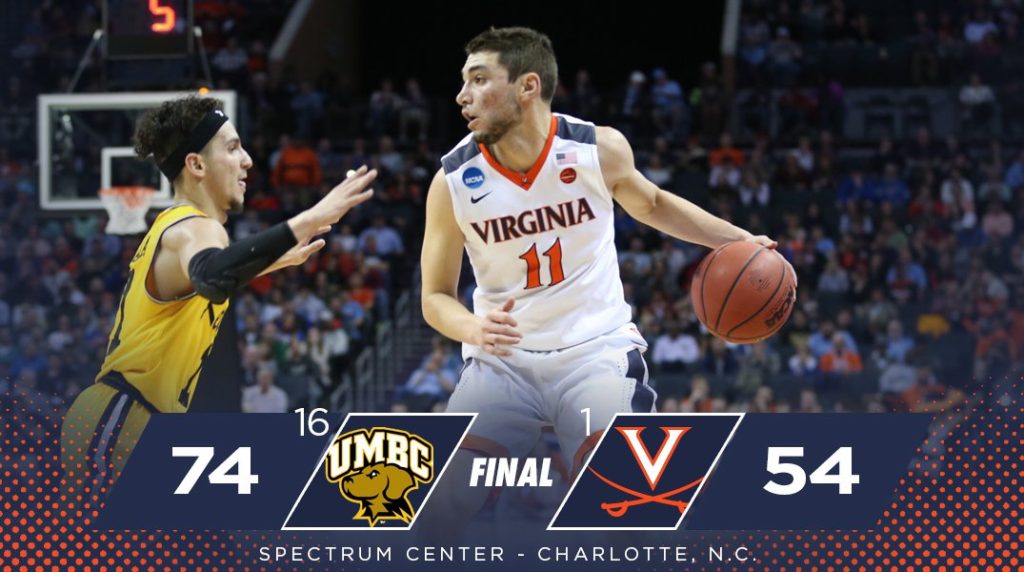
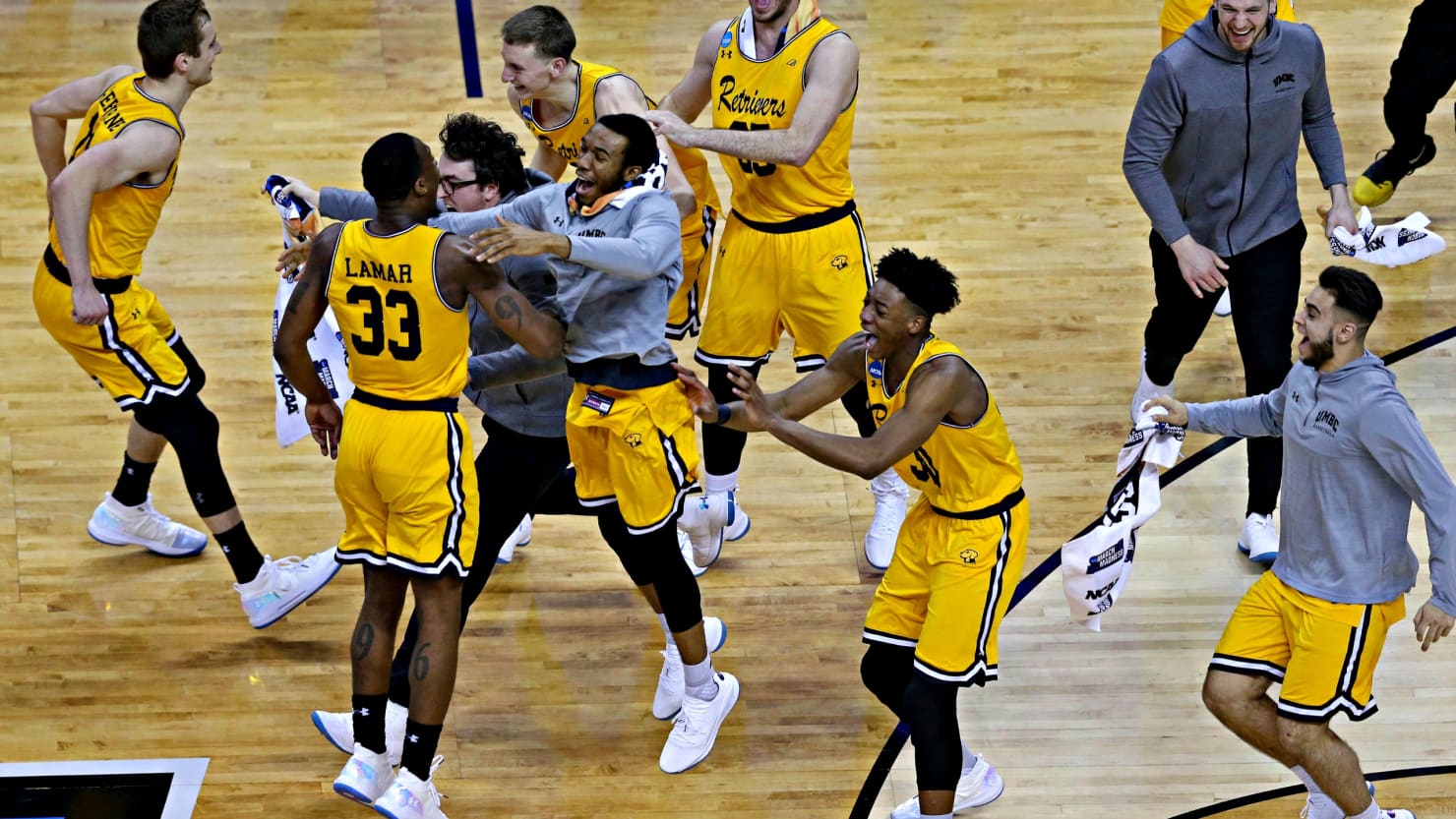
UVA faced an unknown team in the first round, the #16 seeded UMBC Retrievers. UVA was supposed to win easily. They did not. They lost badly. It was a complete disaster. I have already written about why they lost that game. Needless to say, most UVA fans were skeptical about this year. How would the team recover from a train wreck like last year?

UVA lost by 20 points even though the score was tied at halftime.

This year’s season was similar to 2018

UVA had another sensational season this year. Once again they won over 30 games and finished the season highly ranked. Unfortunately, they did not win the ACC tournament and were not ranked #1 in the country going into the tournament. But, they were a #1 seed for the NCAA tournament which meant they would face another unknown #16 seed team during the first round. I am pretty sure all UVA were like me at the beginning of the tournament – nervous that lightning might strike again.

UVA was the #1 seed in the South.

They stumbled again in the first round but did not fall

UVA played Gardner-Webb in the first round. You have probably never heard of the Gardner-Webb Bulldogs. Neither had I. They are a scrappy three-point shooting team. By halftime, it did not look good for UVA. They were down by six points. All the announcers and analysts wondered if it was going to happen again this year. It didn’t. UVA came out in the second half and beat the Bulldogs handily. They outscored them by more than 20 points and walked away with a well-deserved win. They played better.

UVA played one helluva a second half to win this game.

The next two games went well for UVA – they were getting better

UVA also won the next two games. They beat both Oklahoma and Oregon without too much struggle. It was nice to see that the team had their swagger back and were playing well. For the next round, they faced the Purdue Boilermakers who had just beat the Tennessee Volunteers in an epic overtime game. Everyone anticipated that the UVA vs. Purdue game would be a barn burner. It was – one for the ages.

UVA gained momentum by beating Oklahoma and Oregon.

The first half against Purdue was tough

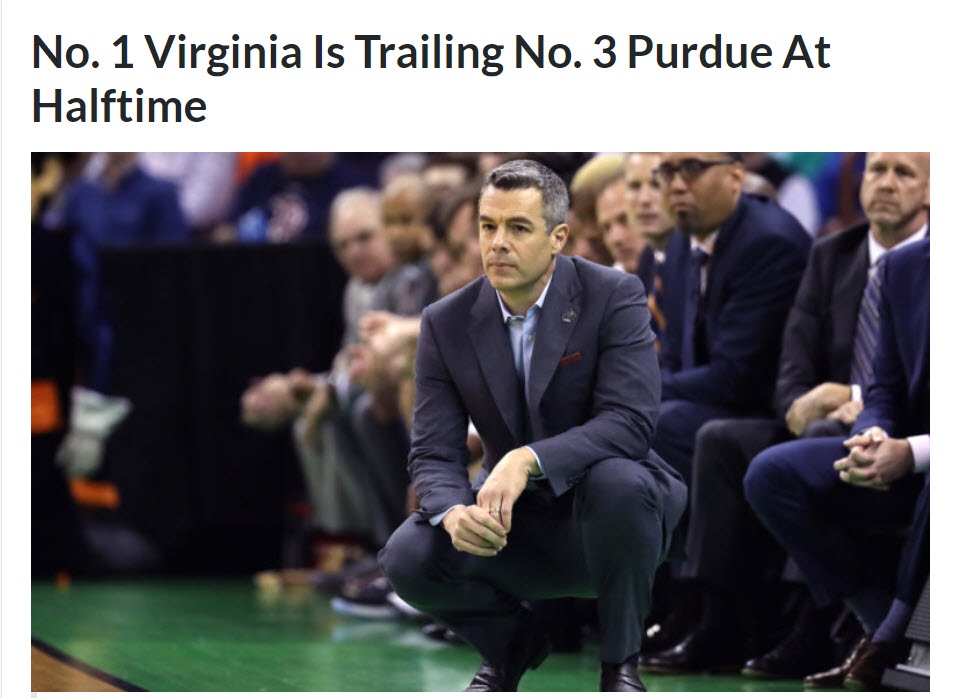
UVA did not look good the first half against Purdue. Their best shooter remained cold, and Purdue’s best shooter was hitting three-pointers. Luckily, the finished the first half almost tied. The Cavaliers went into halftime and Coach Tony Bennett decided to change the strategy. It was obvious to me that he had learned the most important lesson from last year’s loss. He made adjustments and went to “Plan B” for the second half.

UVA trailed by only a point at halftime. (Photo by Streeter Lecka/Getty Images)

The “B” in “Plan B” stood for Big

Coach Bennett changed his lineup for the second half. He put in taller players like Jack Salt to try to disrupt the Perdue offense. It worked, although Perdue’s best shooter, Carsen Edwards, remained hot almost the entire game. This simple change helped keep the game close, not slip away like the loss to UMBC. It was a brilliant move by Coach Bennett.

Jack Salt’s defensive play helped keep the game close.

They addressed the biggest challenge

Carsen Edwards played the game of his life against UVA. He scored 42 points. He was killing the Cavaliers with three-point shots. Coach Bennett decided to have DeAndre Hunter defend against him. DeAndre is the best defensive player in the country according to many experts. This change helped limit Edward’s impact as much as possible. Other Purdue players struggled to pick up the slack whenever Edwards could not score.

Carsen Edwards was the best player in the game.

The coach called a play that gave them a chance to win

In the final seconds of the game, it looked like the Cavaliers would not win. Purdue was up by two points with 5.9 seconds left on the clock. Ty Jerome was shooting his second free throw. If he makes the shot UVA is still down by a point and Purdue would get the ball back. Coach Bennett told Jerome to miss the shot so that they had a chance to win. If UVA could make another basket before the clock ran out they would win. The odds were not good, but Coach Bennett called the play anyway. What happened next was magic.

UVA picked up the pace when it was needed

The game went into overtime. UVA picked up their pace during overtime. They outhustled Purdue and put the pressure on them. It paid off. UVA won the game by five points. Purdue played a great game but lost in the end. I believe Coach Bennett’s leadership made the difference. He led well and his team responded. They are in the final four for the first time in 35 years.

UVA celebrates going to the final four this year.

What about you? Are you getting better as a leader?

What lessons did you learn last year as a leader? Are you applying those lessons so that your team overcomes obstacles and wins the game? In 2018 Coach Tony Bennett took a lot of heat from the press and others about his team’s dismal performance in the NCAA tournament. He leveraged the lessons learned from that experience to lead his team to the final four this year. I hope you do the same. Your team deserves it. ATW Leadership! is here to help.

Coach Bennett hugs his dad, his mentor, after the game.

ATW! is designed to make you a better leader

I hope you join me on this journey to raise up the next generation of leaders. The world is in desperate need of more great leaders. Women and men who lead with confidence, clarity, and creativity. It’s time to become the leader that your world needs. Let’s go All The Way!

All The Way Leadership!

How to avoid a historic loss when everything is at stake – Plan B

The NCAA men’s basketball tournament was excellent this year. Last year both the men’s and women’s competitions were thrilling, full of great games. This week I will talk about leadership lessons from last year’s men’s tournament. I have already mentioned this in previous posts, and I will say it again. Leaders can learn a lot from sports. Many of these lessons are directly applicable to the real world. You must have a “Plan B”.

Villanova won the 2018 NCAA Men’s basketball championship.

The wrong team won the men’s tournament last year

Villanova won another championship – their second one in three years. Winning the tournament is challenging. Winning it multiple times is really difficult. It is an impressive accomplishment. Villanova was not supposed to win the tournament. Sure they were one of the top seeds. But, they were not the top-seeded team. The University of Virginia was the unanimous #1 team going into the tournament. My mighty Cavaliers were supposed to win it all. They didn’t. In the last post, I described why a great team like UVa loses. Now I am going to describe the one major lesson we can learn as leaders from their historic loss.

UVa was crushed by UMBC in the first round of the tournament.

Major leadership lesson – have a “Plan B”…always

Things never turn out quite the way we plan them. We all know this, especially as leaders. It is extremely rare that everything goes perfectly for you and your team. You will face obstacles. It is a given. In their historic loss, UVa’s plan was not working. For several reasons, Tony Bennett’s system was failing them and they fell further behind as the game progressed. Unfortunately, they did not really have a “Plan B”, or they chose not to change their plan. They did not make the proper adjustments and paid the price. They lost. Don’t let this happen to you as a leader. You must have a “Plan B”…always. Always!!

UVa's plan was not working and the players did not know what to do.
UVa’s plan was not working and the players did not know what to do.

Leaders are responsible for having “Plan B”

Your team looks to you for leadership. Part of your many responsibilities is to determine when it is time for “Plan B’. Do not be surprised if your team turns to you and asks “what do we do now” when the current plan is not working. They will. They may wonder if they are on the right team if you do not have any ideas about what to do, much less a “Plan B”. Don’t disappoint them by choosing to ignore the signs that the current plan is not working, and tell them to just keep going. Winning teams make adjustments along the way.

Looks for signs of trouble. Everything is not always fine. (Photo by Justin Lubin/NBC)

The “everything will be fine” mentality

I have fallen into this trap many times. It is a naive approach. Don’t stick your head in the sand and hope that things will get better. Make the call. Change to “Plan B”. Of course, it is impossible to implement a “Plan B” if you do not have one. Leaders are responsible for having a “Plan B”. Don’t rely on your team’s performance to overcome the fact that you did not plan well enough to include a “Plan B”. It is not fair to them. Do your job as a leader.

Coach Tony Bennett failed to implement a Plan B during the game.

Good leaders create “Plan B” well before it is needed

Trying to make up a “Plan B” on the spot can be challenging. I am not saying it is impossible. I have served with leaders who were quick thinkers and could figure out a new plan on the spot. They were at their best when the situation around them was falling apart. But, that leadership attribute is rare. Most of us do our best thinking when things are calm, not in the heat of battle. Think about your contingencies and talk through “Plan B” with your team beforehand. This approach will give your team more confidence and better prepare them for success.

In preparing for battle I have always found that plans are useless, but planning is indispensable.

General Dwight D. Eisenhower

Your team may have “Plan B” already figured out

As the leader, you are responsible for having a “Plan B”. But, that does not mean you should avoid getting inputs from your team members. When you talk through contingency plans ask your team for inputs. Ask them questions like how should we respond if this happens. They may already have “Plan B” figured out, especially your more experienced team members. Leverage their knowledge and experience for the good of the team. Some of the best contingency plans I executed as a leader came from team members, not me. Here is an example from my own career.

Your team may already know the best answer for "Plan B".
Your team may already know the best answer for “Plan B”.

What to do when your normal approach will not work

One time my client faced a challenging situation and I was not sure what to do. She was asked to radically revamp the organization’s strategy, and to do it quickly. When I asked her how long my team had to craft the new strategy she said a month. Wow – that was fast given the size of the organization. I met with my team to discuss our approach. We laid out the timeline using our normal strategic planning process and came to the conclusion that it would take three months. We had one month, not three. Obviously, we needed a “Plan B” before we even got started.

Plan B may be your best option from the start.

Sometimes the “B” in “Plan B” stands for bold

I had no idea what we were going to do so I solicited ideas from my strategy experts. The two most junior members of the group had some ideas that just might work. They recommended we use a new approach known as design thinking to formulate the strategy. I was somewhat familiar with design thinking but had not implemented it before. Next, we would create a short powerpoint deck for the strategy instead of the normal lengthy word document. Lastly, we would repurpose time at an upcoming event to gather feedback from stakeholders in a group setting vice in separate meetings.

Design thinking requires a new way of collaborating.

Get buy-in for your “Plan B”

The plan they described was bold. Would it work? I did not know, but it was worth a shot since we did not have any better ideas. We briefed the new plan to our client. We told her it was bold but we were committed to making it happen. She was willing to try it. It was a radical shift from the normal approach, but it would achieve the result she needed.

What training do your team members need?
You need to make sure everyone understands “Plan B”.

You must commit to Plan B or your team may fail

We moved forward with “Plan B”. Many stakeholders questioned the new approach. We heard questions like is this really going to work? Why aren’t we following the normal approach? All reasonable objections. My role as the leader was to address these questions and keep the team moving. I showed my commitment by not hedging my bets. Rather I was committed to “Plan B”, and the team knew it. We were either going to be successful together, or I would take the blame if it did not work. It is a risk that you must be willing to take.

Business is about people. It’s about passion. It’s about bold ideas, bold small ideas or bold large ideas.

Tom Peters

Some of your best results may come from “Plan B”

My team did not disappoint me, or the client. They worked hard. They made it happen. The new approach forced everyone to think differently about the solution. We came up with a much better strategy than the previous one. It was simple to understand and would propel the organization forward at a much faster pace. When our client briefed the new strategy to her boss it was a huge hit. Big success based on a bold “Plan B” from two junior team members who had the courage to share their idea.

Success may take a team.

What I learned from that experience

Afterward, I thought about what would have happened if we stuck with our normal approach. I am convinced we would have failed, just like UVa did during the NCAA Men’s basketball tournament. Make sure you always have a “Plan B”. You never know when you will need it, and your “Plan B” may end up being the better way in the long run.

Two roads diverged in a wood, and I—
I took the one less traveled by,
And that has made all the difference.

Robert Frost Poem

ATW! is designed to make you a better leader

I hope you join me on this journey to raise up the next generation of leaders. The world is in desperate need of more great leaders. Women and men who lead with confidence, clarity, and creativity. It’s time to become the leader that your world needs. Let’s go All The Way!

All The Way Leadership!

How in the world does a great team lose big?

A year ago disaster struck. Millions witnessed the best men’s college basketball team in the country have a total meltdown. I watched in horror as my mighty University of Virginia Cavaliers experienced the biggest upset ever in the NCAA Men’s basketball tournament. UVA lost to the University of Maryland Baltimore County (UMBC) Retrievers by 20 points. How in the world did they lose that game?

UVA lost by 20 points even though the score was tied at halftime.

The game was not even close

I will say it again – UVA lost to UMBC by 20 points!! Many expected UVA to rally and win like the Louisville game I described in a previous post. It did not happen. The game only got worse and worse in the final few minutes. Like other alum, I turned off the television and went to bed shocked at what had just happened.

We lost by 20? We lost by 20. By 20 in the first round of the NCAA Tournament. That pretty much sums it up itself.

Devon Hall, Guard on the UVA basketball team

There are always surprises in March Madness

Upsets are common in the NCAA tournament. They happen every year. But, this loss was different. The top-seeded team lost in the first round to the lowest-seeded team. I will say that again – the #1 team lost to the #16 seeded team in the bracket. As we all now know a #1 team had never lost to a #16 seeded team before…in the history of the tournament. 

UVA was the #1 seed in the South bracket. UMBC was the #16 seed.

It was a blowout of epic proportions

What in the world happened? What caused this historic loss? In this post, I will explain why they lost and what we can learn from the game. For leaders, some of the best lessons come from when things go horribly wrong.

Who has never tasted what is bitter does not know what is sweet.

German Proverb

Most college basketball games are close up until the end

It is somewhat rare that a college basketball team is losing by so many points that they do not have a chance to win. Do blowouts happen? Sure, but many games are won in the last minute. The NCAA tournament is well known for its last-second victories. They happen every year. It is one reason so many fans watch the games. They are usually exciting up to the end. In this game, the last minute did not matter. The unprecedented upset was completed well before the final whistle.

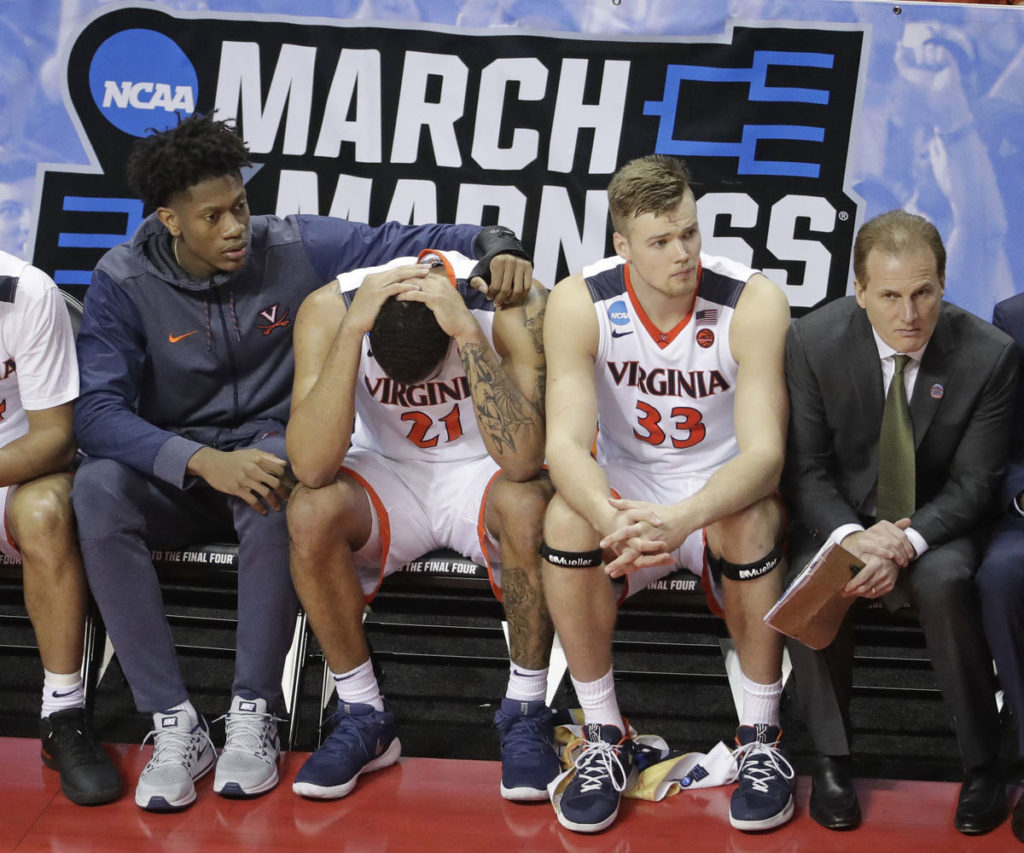
Players on the bench watch as UVA fails to rally against UMBC.
Players on the bench watch in dismay as UVA fails to rally against UMBC.

There are many reasons a sports team loses

In all sports, a team can lose for many reasons. In basketball, it is important that a team play well on both offense and defense. Coaching philosophy and strategy seem to matter a lot. Most of the best teams in the country have the best coaches. UVA falls into this category. Shooting free throws can make a difference, especially in the final minutes. Keeping your players out of foul trouble is also important. Many factors go into determining whether a college basketball team wins or loses. Great coaches pay attention to all these factors as the game progresses so that they can position their team for the win.

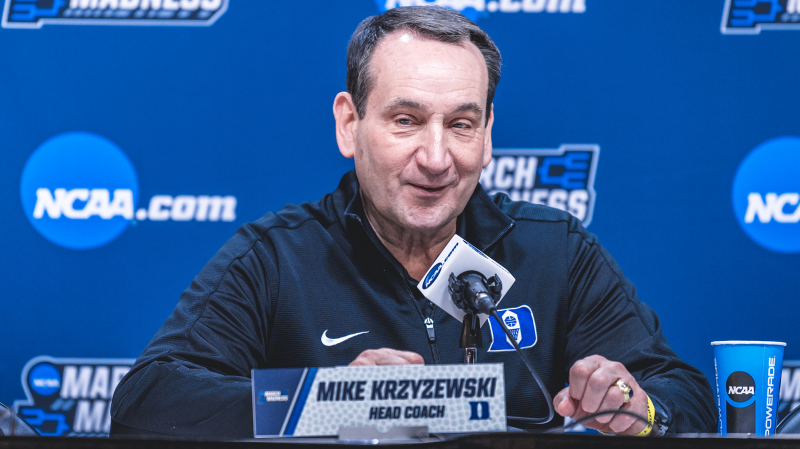
Coach K is well known for being a great coach during the tournament.
Coach K is well known for being a great coach during the tournament. They keep winning.

Life is not much different when it comes to winning

I believe that the same is true in life, especially in business. There are many reasons your team will win or lose. You may have a bad strategy. You may not be a good leader yet. Your team may perform poorly when it matters most. Your competitors may simply be better than you and your team. They may have a superior product, a lower price, or a better plan. The list goes on. As a leader, it is important to learn from your losses so that you do not repeat the same mistakes over and over. A leader who loses and fails to learn from his mistakes will eventually be replaced by someone who knows how to win. It is the reality we face as leaders. Win or the organization will move on to a new leader.

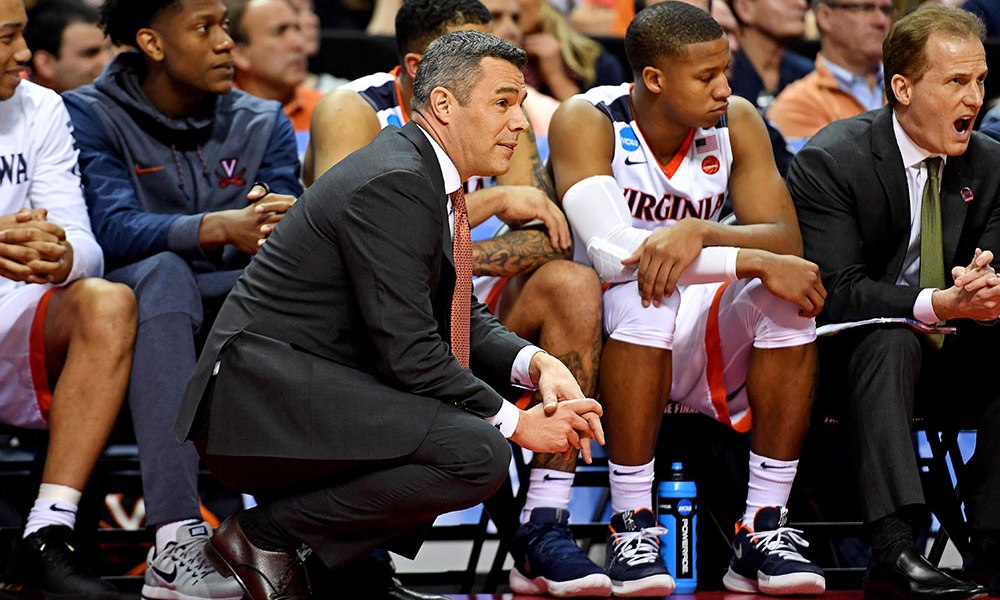
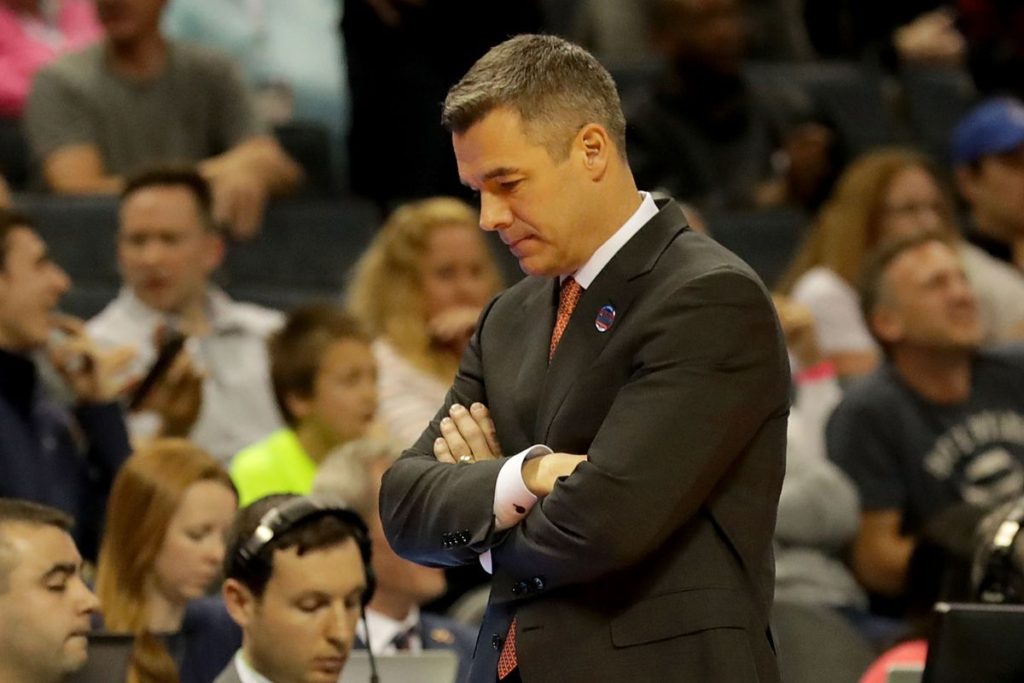
UVA Head Coach Tony Bennett contemplates why his team does not play well during March Madness
UVA Head Coach Tony Bennett contemplates why his team does not play well during March Madness.

Why did the UVa Cavaliers lose to the UMBC Retrievers?

There are many reasons that UVa failed to beat UMBC. They lost a key player to an injury a few days before which drew much attention. I am not convinced being down one player is why they stumbled. Instead, I believe that UVA lost badly for three specific reasons. All three of them relate directly to leadership. I admire Coach Tony Bennett for his leadership philosophy, coaching prowess and ability to win.  But, he did not perform well as the leader in this situation. He admitted the same after the game.

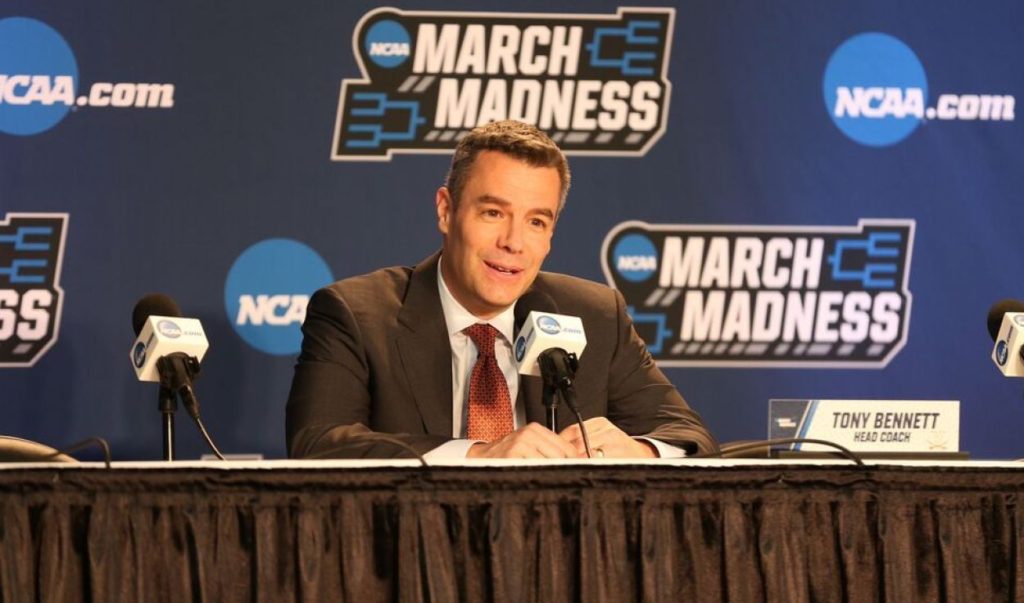
UVa Coach Tony Bennett talking about the historic loss after the game.

1. They failed to adjust their plan when it was not working

UVa looked good at first. They opened up a nice lead and seemed to be cruising along despite missing a key player. Trouble started to show. UMBC tied the game by halftime. The score was low which is not unusual. UVa’s defense is known for keeping the score low. Something happened after halftime. UMBC caught fire, scoring a lot of three-point shots. UVa was unable to respond. They struggled to score and the gap widened. Their plan was not working, and Coach Bennett did not make any major adjustments. He kept the team playing the same defense and offense, despite the fact it was not working. His unwillingness to change the plan cost them dearly as the game progressed.

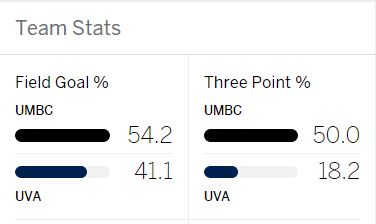
UMBC shot 50% for three pointers, much better than UVa.
UMBC shot 50% for three-pointers, much better than UVa.

2. They did not solve the biggest challenge

UVa is usually able to keep the score low, and the game close. They are not a good come from behind team, and they know it. This game was different. They were unable to stop UMBC from scoring. It was no great mystery how the other team was scoring so many points. UMBC was drilling three-point shots. One of their players, in particular, Jairus Lyles, was having the game of his life. Every shot he took seemed to score. UVa did little to adjust the defense to stop him from scoring. Jarius ended the game with 28 points, twice as many as any other UMBC player. UVa failed to solve the biggest challenge – UMBC’s ability to score three-point shots.

Jairus Lyles scores one of his many baskets on the usually tough UVa defense.

3. They did not pick up the pace when it was needed

Things got worse as the second-half progressed. With ten minutes left in the game, UVa was losing by 16 points which is a lot. It was time to rally, time to pick up the pace. They kept playing the same offense. There was a little more sense of urgency, but not the kind you would expect to see when a #1 team is losing to the #16 by 16 points with only ten minutes left. Was there plenty of time left in the game? Sure. I am simply pointing out that sometimes a team needs to pick up the pace a lot to win. If you are losing badly the last thing you should do is act like everything is fine. In this case, it was not. The situation did not improve. It got worse.

UMBC increased their intensity the second half. UVa failed to respond. Credit: Chris Keane
UMBC increased their intensity in the second half. UVa failed to respond. Credit: Chris Keane

The worst losses happen when you are expected to win

Losing sucks. I do not know any leader who enjoys losing. If I did I would recommend he or she stop leading and become a follower. The most difficult losses happen when you are expected to win. That is what happened to UVa. The game was supposed to be a cakewalk for them. They probably thought that going into the game, and paid the price. They ended up losing by 20 points. It was humiliating. The #1 team in the country lost what may become known as the worst upset in NCAA tournament history.

UMBC picked apart the UVa defense the last few minutes for easy baskets like this dunk.

You can avoid losing by not making the same mistakes

If you want to win as a leader it is important to learn from the mistakes of others. Make sure that you avoid this scenario. When you realize that your plan is not working – change the plan. Don’t hope that the situation will improve when you know deep in your heart that it won’t. Deal with the biggest challenges your team faces. Figure out what is causing the problems and fix them.

Pick up the pace so that your team can win, not lose

It is easy to fall into the trap of acting like everything is fine when it isn’t. I have witnessed this naive approach too many times to count during my career. Be a better leader. Next week I will go into more detail about how to avoid a historic loss for your team. You can do it, and we are here to help.

In the end, it was a remarkable season but we got thoroughly outplayed and that’s the reality of it. I hate for this team to lose like this. If you play this game and step into the arena, this stuff can happen.

Tony Bennett, UVA Head basketball coach

ATW! is designed to make you a better leader

I hope you join me on this journey to raise up the next generation of leaders. The world is in desperate need of more great leaders. Women and men who lead with confidence, clarity, and creativity. It’s time to become the leader that your world needs. Let’s go All The Way!
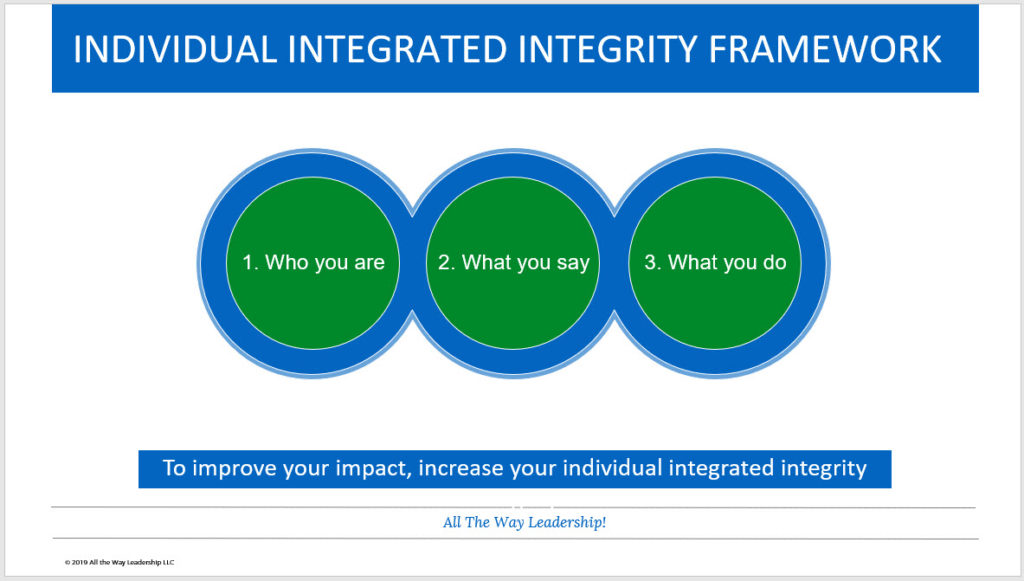
All The Way Leadership!